



Aso Oke Styles for Ladies: The Complete 2026 Guide
2026-08-07
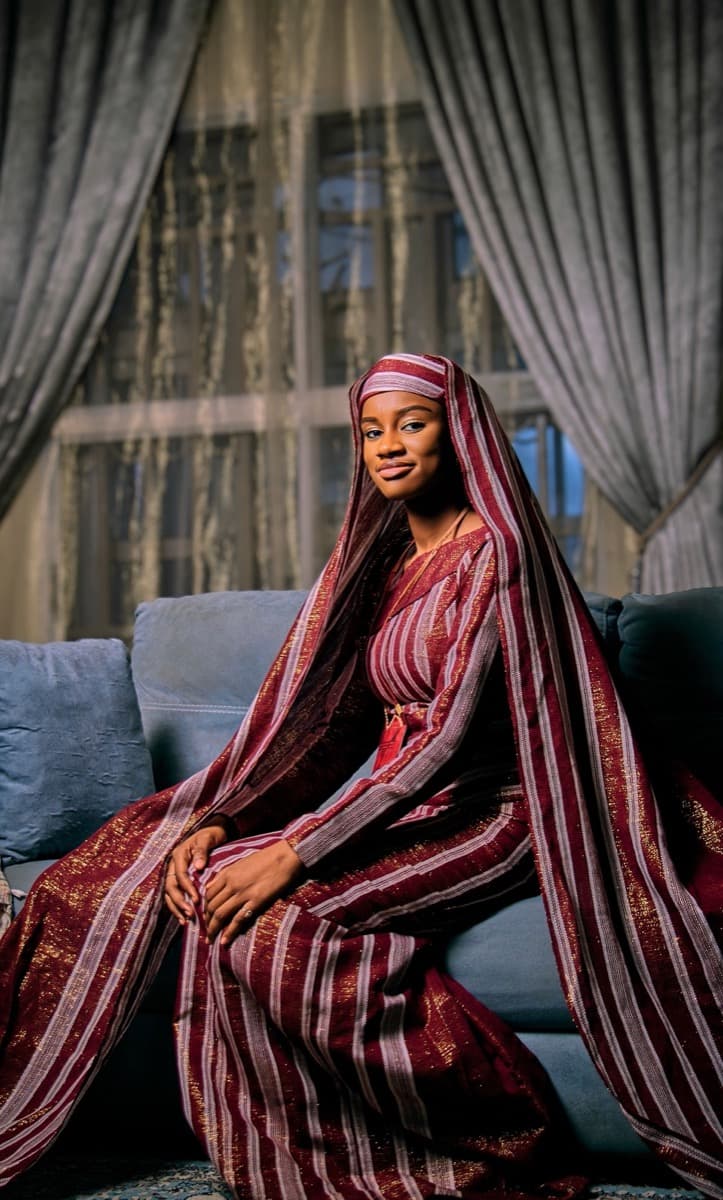
Aso oke is a handwoven cloth from the Yoruba people of southwestern Nigeria — not a printed fabric like ankara, but strips of cloth woven on a narrow loom and sewn edge-to-edge into full panels. That's the texture you're seeing when an aso oke gown looks slightly ridged or richly textured up close: it's literally made of woven strips, not one continuous sheet of fabric.
If you're getting an aso oke outfit made for a wedding, an owambe, or just because it's your turn to look expensive, here's what to actually know before you talk to your tailor.
What Makes Aso Oke Different From Other Nigerian Fabrics
Aso oke is woven, not printed — that's the core difference from ankara (which is a printed wax fabric) or lace (which is embroidered/machine-made). Traditionally, it's woven in narrow strips (roughly 10-20cm wide) on a horizontal loom called an ofi, historically the work of male weavers, while women traditionally handled cotton spinning and dyeing. Today, women increasingly weave too, and largely run the trading and business side of the industry.
The craft is centered in Iseyin, Oyo State, which remains the industry's biggest weaving hub today — and despite decades of attempts to mechanize the process, handweaving still dominates, because machine-made cloth can't reproduce the texture and slight irregularities that make aso oke recognizable. Nigeria's aso oke trade is a real export industry now too, driven heavily by diaspora demand — estimated at over 50,000 artisans and around $120 million in export revenue as of 2023.
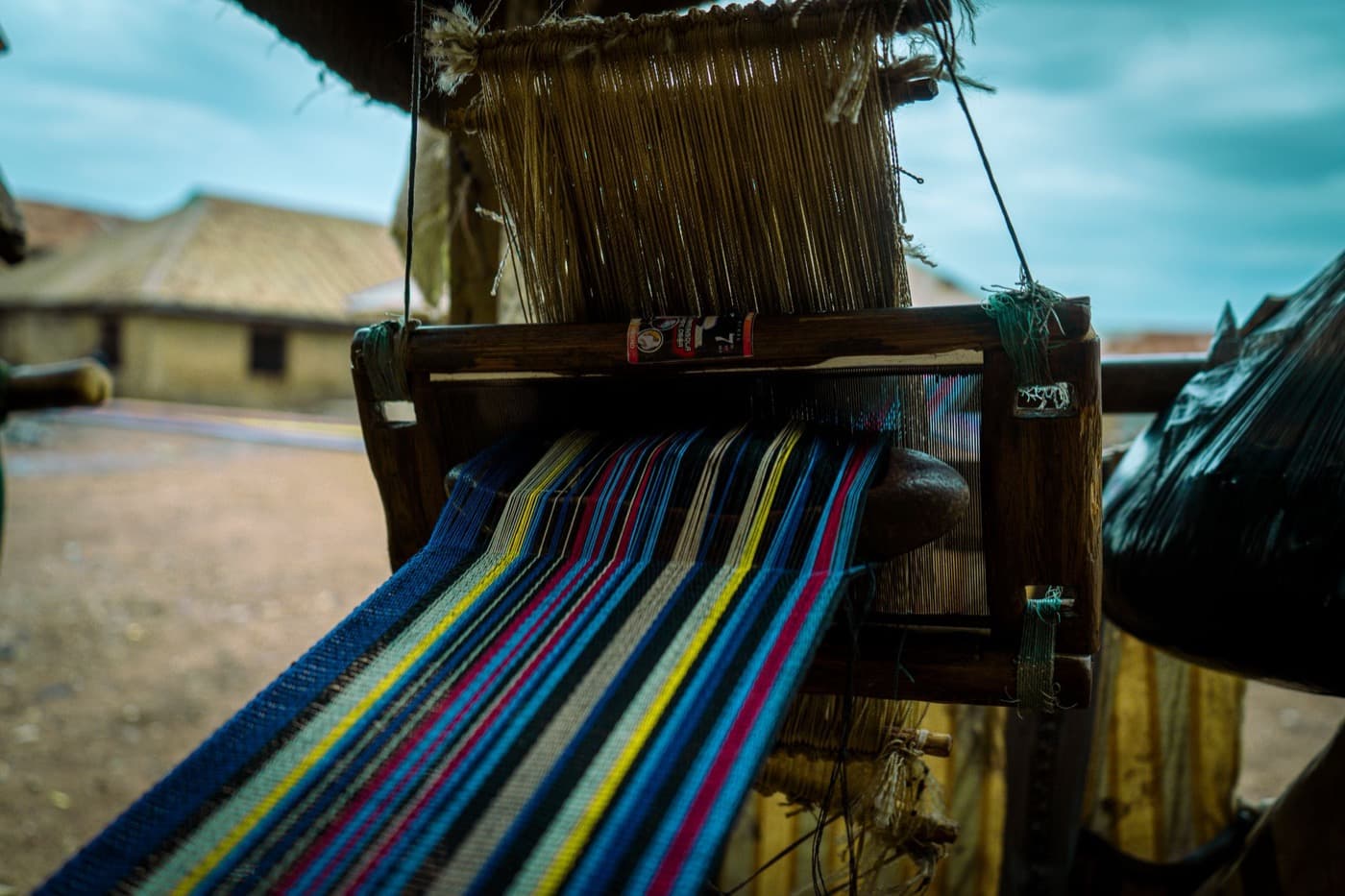
A narrow-strip loom (ofi) mid-weave — this is what "handwoven, not printed" actually looks like.
The Classic Types (and Why There Are More Than Three)
You'll usually hear about three "classic" aso oke types — but these are the best-known, not the only ones:
- Sanyan — woven from wild silk (from Anaphe moth cocoons) blended with cotton, giving it a natural tan/beige tone. Historically tied to royalty and high status.
- Alaari — woven with deep red or magenta thread, traditionally signifying wealth and celebration.
- Etu — dark indigo, almost black, with fine light stripes running through it. "Etu" means guinea fowl in Yoruba, and the pattern is said to echo the bird's speckled feathers.
Beyond these three, weavers also produce varieties like opa aro (dark blue with a green stripe) and waka (black with red stripes) — so if your tailor or fabric seller mentions a type you haven't heard of, it's probably a real, older variety, not a made-up name.
Aso Oke Styles for Ladies in 2026
Aso oke has moved well past "wrapper and gele for your mother's generation" — here's how it's actually being styled now.
Structured Gowns
Aso oke cut and sewn like a modern fitted or A-line gown, sometimes corseted at the waist, instead of the traditional loose wrapper silhouette.
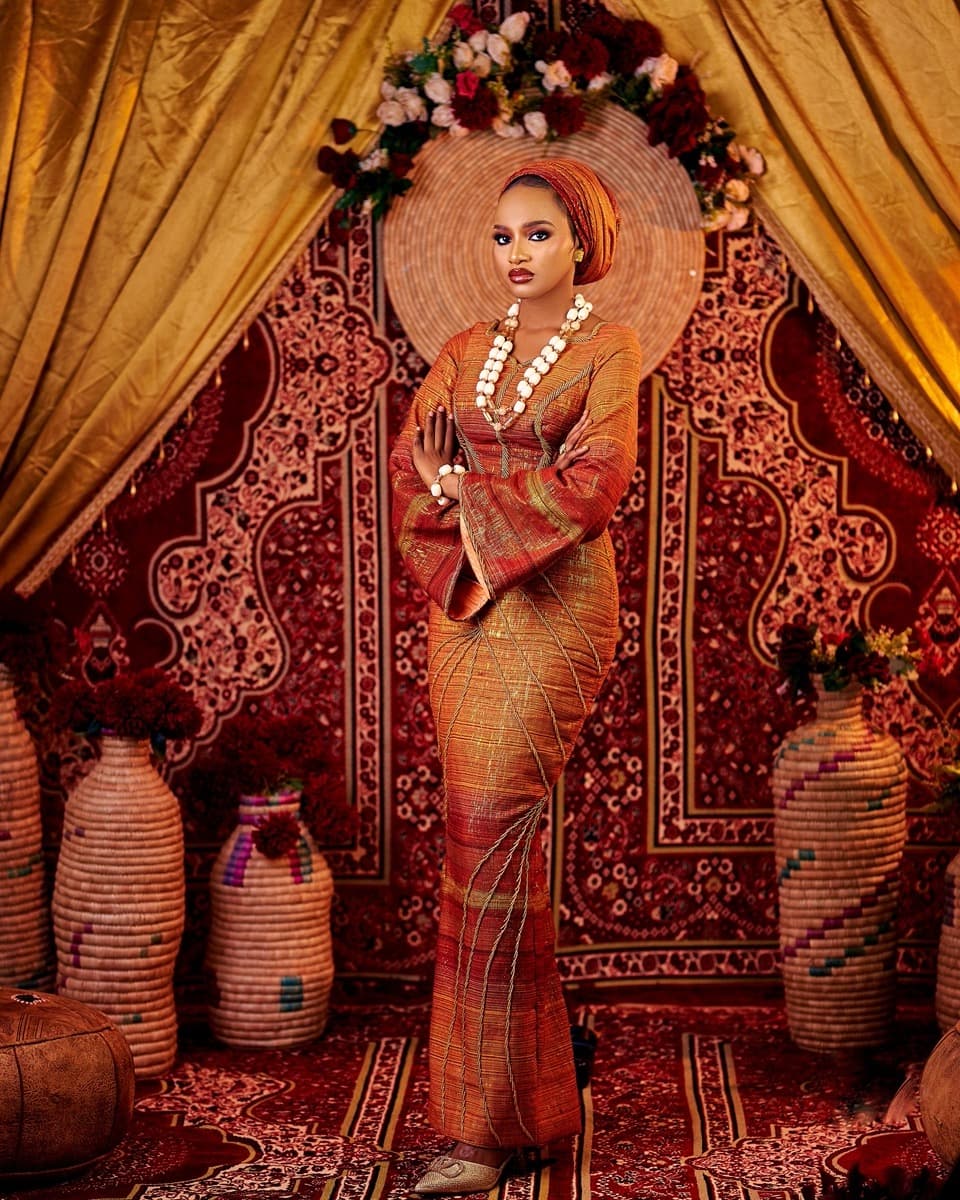
A fitted, floor-length aso oke gown — a world away from the traditional loose wrapper cut.
Aso Oke With Lace Panels
Mixing woven aso oke with lace insets (sleeves, bodice panels) for a lighter, more contemporary look, especially popular for aso-ebi at weddings.
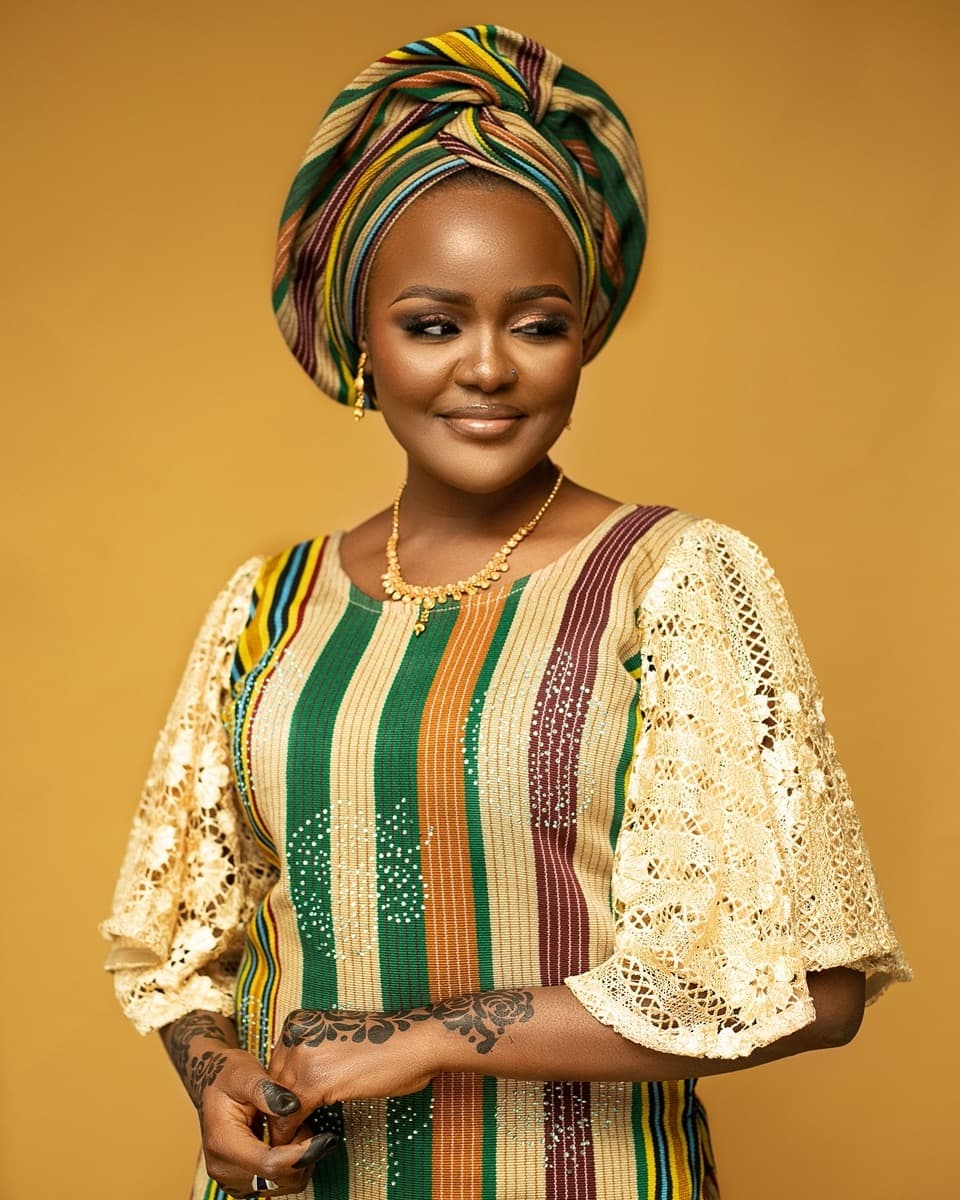
Striped woven aso oke through the body, cream crochet lace on the sleeves — the two fabrics doing different jobs in the same piece.
Iro and Buba Sets
The traditional wrapper-and-blouse combination, still a strong choice for owambe and formal family events, often paired with a matching or contrasting gele.
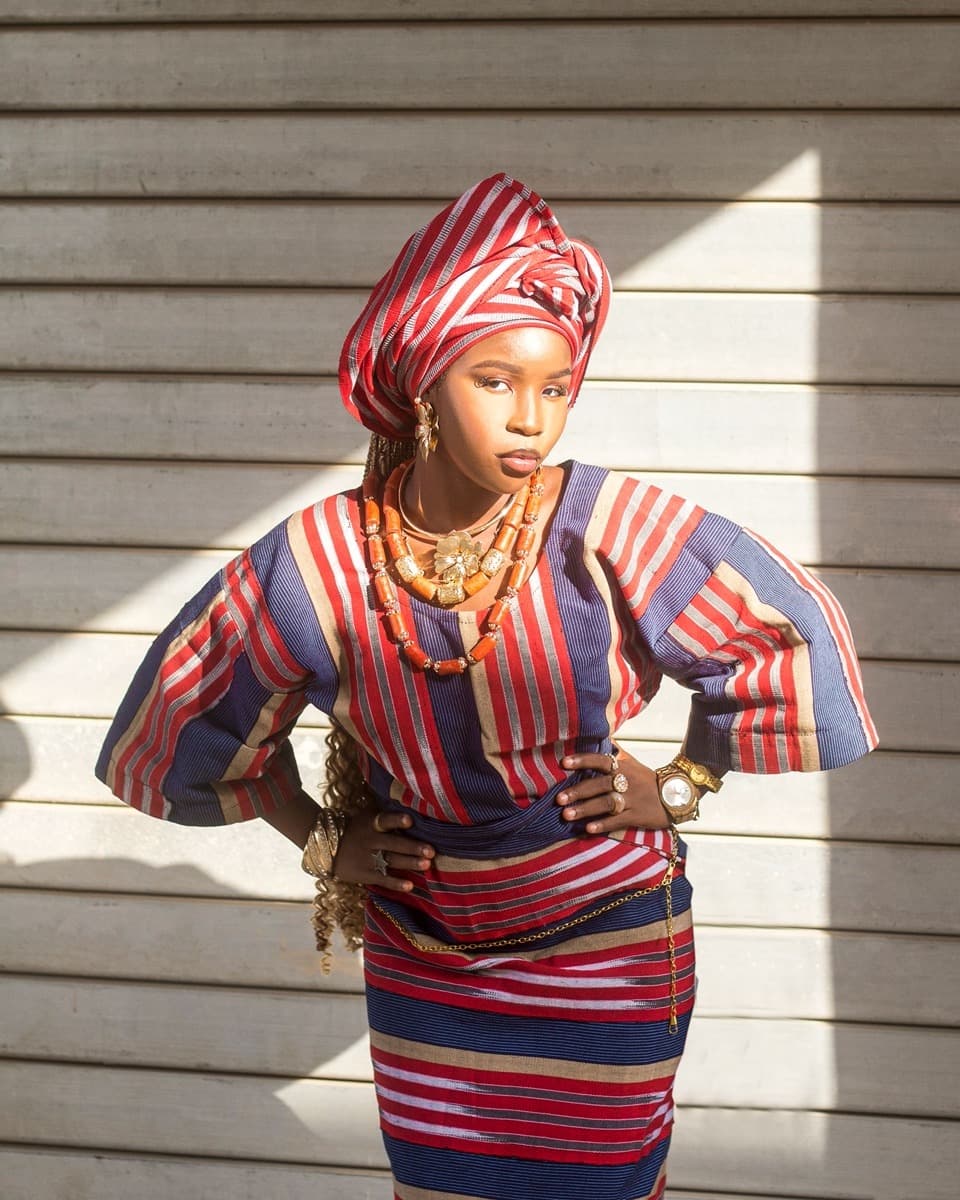
The classic two-piece: a buba blouse over a separate iro wrapper, cinched at the waist.
Boubou/Kaftan-Style Aso Oke
A looser, flowing cut, more relaxed than a fitted gown, worn for less formal occasions.
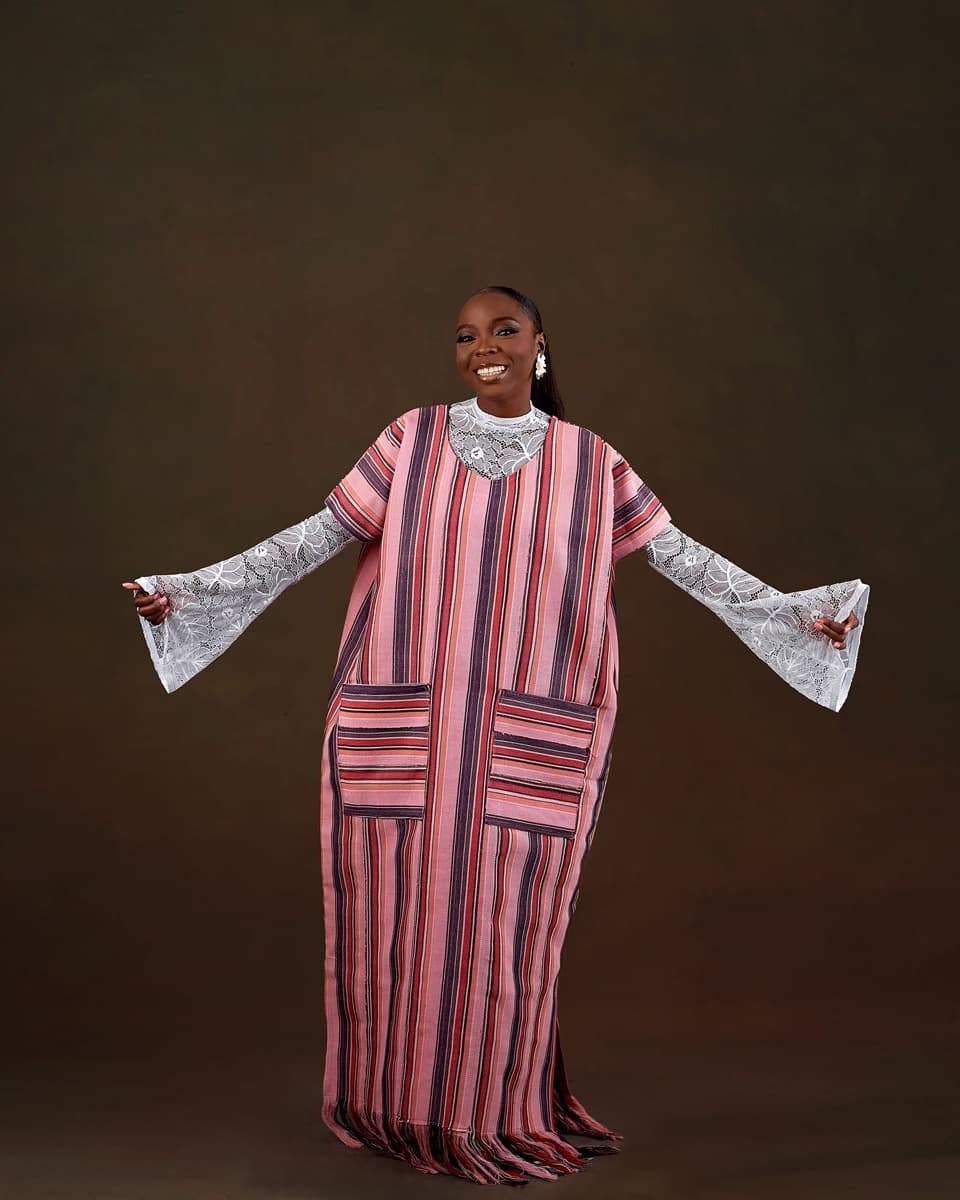
Loose and flowing rather than fitted — the boubou/kaftan cut trades structure for comfort.
Aso Oke Gele on Its Own
Even when the rest of an outfit is lace or a different fabric, an aso oke gele is a common way to bring the fabric into a look without a full aso oke outfit.
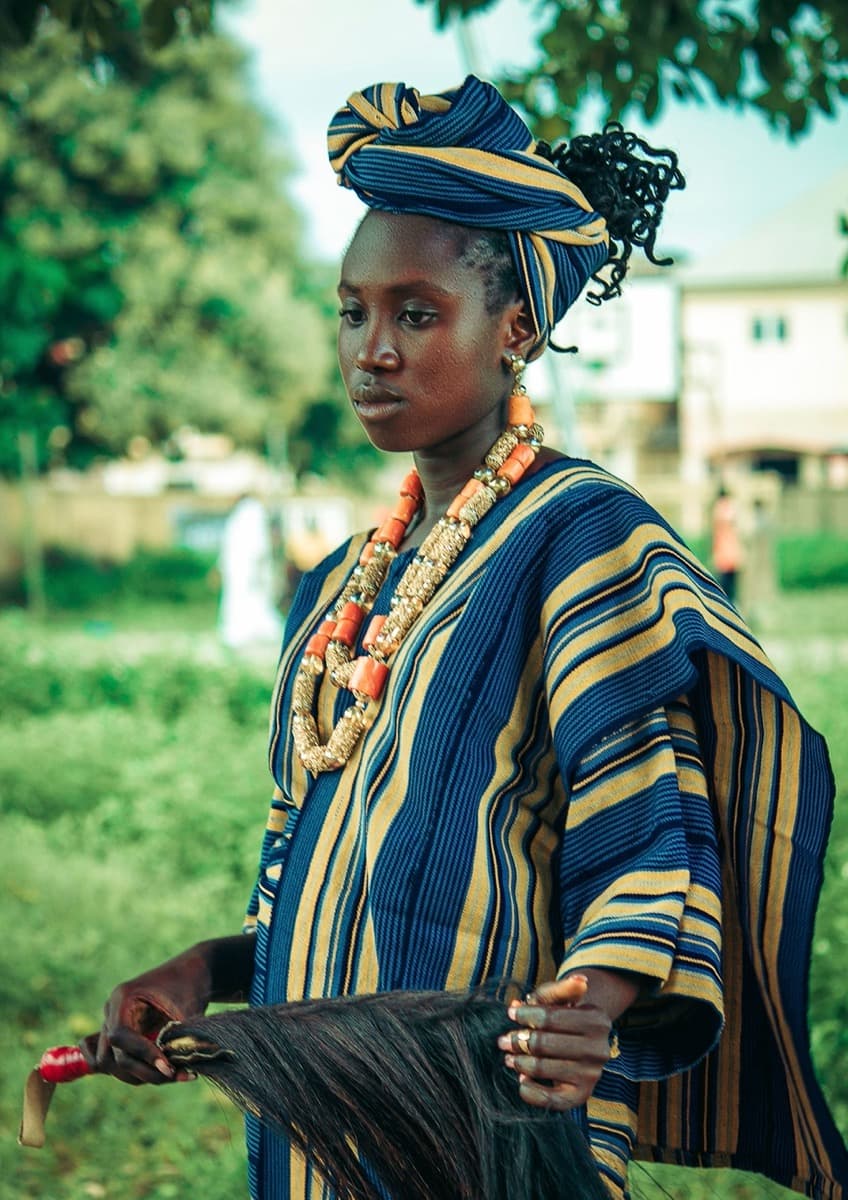
A striped aso oke wrap paired with a matching gele — one of the simplest ways to bring the fabric into a look.
Lagos Fashion Week designers have also been reinterpreting aso oke into structured menswear and eveningwear over the past few years, which is part of why it's showing up more in contemporary, non-traditional cuts rather than only classic wrapper styles.
What It Costs to Work With
Aso oke isn't cheap, and it's gotten more expensive — the cost of a bundle of aso oke thread has risen sharply over the past decade as material and production costs have climbed. That's worth knowing before you order: an aso oke outfit is a bigger material investment than an ankara or lace equivalent, so budget accordingly and talk to your tailor early about how much fabric a specific style will need.
Caring for Aso Oke
Because it's handwoven, aso oke needs gentler handling than most everyday fabric:
- Hand-wash in cold water with a mild, pH-neutral detergent — never bleach, and never machine-wash.
- Wash it separately, since colors (especially deep alaari reds or etu indigo) can bleed.
- Air-dry in the shade rather than direct sunlight.
- If you need to iron it, use low heat with a cloth barrier between the iron and the fabric.
- Store it somewhere cool and dry, away from direct sunlight, and avoid leaving it folded in the same creases for long periods.
Ordering Yours
Once you've picked a style, the most important conversation is with your tailor — aso oke's woven texture and strip construction mean it behaves differently under the needle than lace or ankara, so it's worth working with someone who's handled it before. Bring reference photos of the silhouette you want, ask how much fabric the style requires, and give extra lead time given how labor-intensive genuine handwoven aso oke is to source and work with.