



Fulani Traditional Dress: Why It's Not Just Northern Nigerian Formalwear
2026-08-09
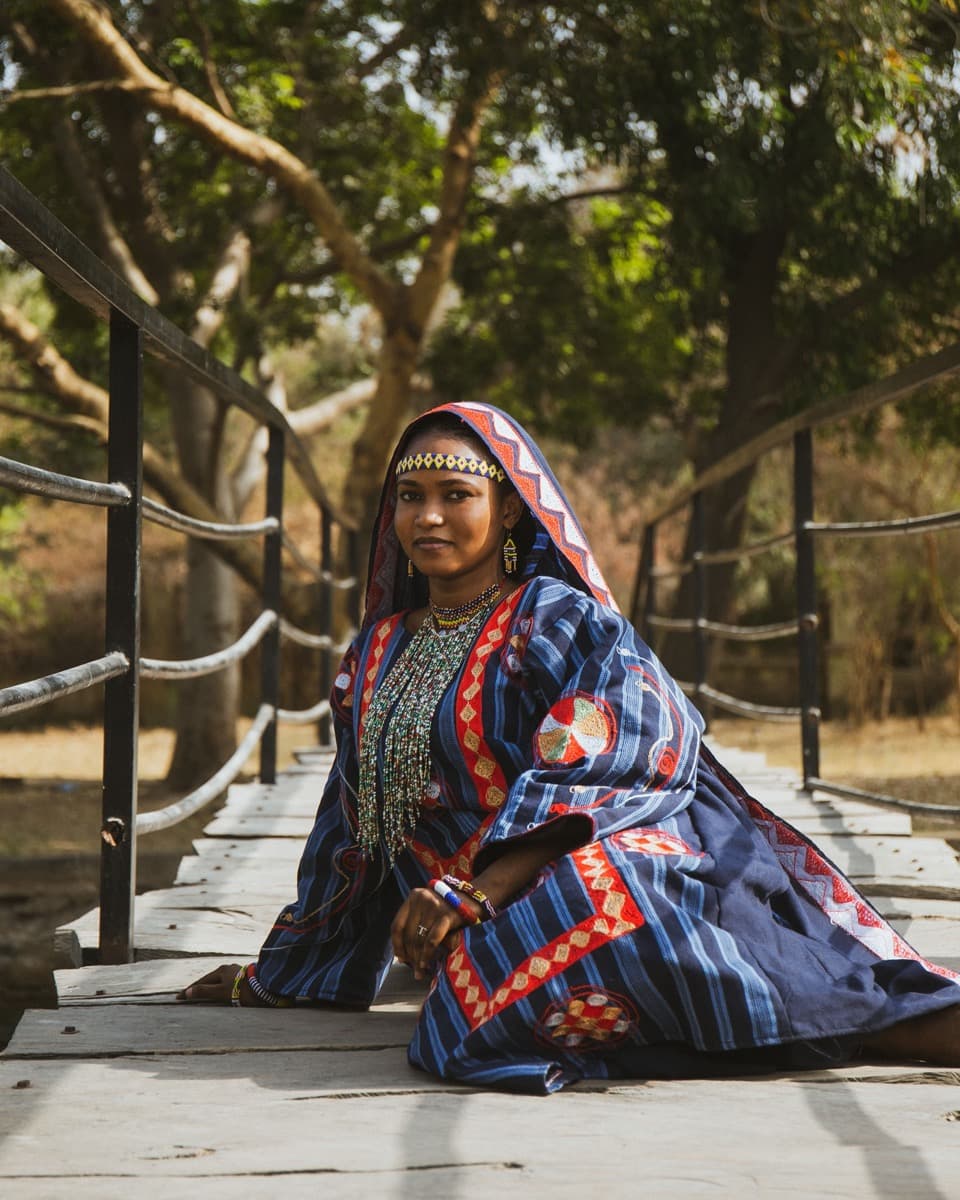
We already covered babban riga and kaftan as shared Hausa-Fulani formalwear in Northern Nigeria. This post is deliberately narrower — because the honest answer, after real research, is that most of what gets casually labeled "Fulani fashion" online is actually that same shared regional dress, not something ethnically distinct to the Fulani specifically. The genuinely distinct material is elsewhere: in pastoral adornment traditions — braids, beadwork, and real regional variation — that most fashion content skips past entirely.
Fulani and Hausa Are Distinct Peoples, With Deeply Blended Dress
Fulani and Hausa are historically and linguistically separate — Fulfulde and Hausa are different languages — but centuries of shared life in Northern Nigeria produced the "Hausa-Fulani" cultural and political bloc, and with it, genuinely shared formal dress. Babban riga, embroidered robes, and caps belong to that shared regional tradition, not to one group exclusively. In Sokoto State specifically, some Fulɓe groups (like the Sullebawa) are documented as having gradually shifted toward Hausa language and local identity, becoming known locally as "Hausa'en" — real, specific evidence of how deep this blending actually goes in at least one Nigerian region. So when you see "babban riga" described online as a Fulani garment, that's not quite wrong, but it's not distinctly Fulani either — it belongs to both.
Where the Real Distinction Actually Lives: Pastoral Adornment
The genuinely well-documented, ethnographically distinct Fulani material comes from pastoral and nomadic Fulani communities (referred to in some sources as mbororo'en) rather than from a parallel formal wardrobe. A 1986 academic study by C.O. Adepegba on Fulani nomad decorative arts is the strongest source we found here, and it describes real, specific detail: men traditionally wearing simple tunics and tapered, mid-calf breeches with distinctive spiral stitching at the neckline and square stitching across the shoulders and chest; women tying cloth from armpit to calf as a wrapper with a smaller shawl cloth; unmarried girls wearing a waist-tied wrapper with a blouse. Adepegba frames the elaborate ornamentation in these communities as social and aesthetic display within a mobile pastoral society — a way to look good to fellow herders and outsiders alike — rather than purely practical dress. The beaded headpiece and layered necklaces in the photo above are part of exactly that adornment tradition — the same impulse toward visible, social ornamentation Adepegba documents, even where a headwrap covers the hair itself.
Braids and Beads, With Real Regional Detail
This is the best-sourced part of the whole topic. Fulani women traditionally wear long braids — commonly styled in a set of five, looped or hung to the side around a central coiffure — and Adepegba's research adds real regional nuance rather than treating this as uniform: women in Kontagora favor pendulous braids finished with bulbs, women in northeastern Nigeria pack hair centrally with side braids, and other regions favor thick, hanging braid styles instead. Because Fulani women's natural hair is often short, false hair extensions are commonly woven in to achieve these styles — a specific, credible detail rather than a generic claim. Young unmarried men are documented wearing elaborate "courting" hairstyles with many thin braids and metal ornaments before marriage, cropping their hair short afterward.
On jewelry: the academic source confirms abundant neck beads and leather charm tablets, and in Kontagora specifically names two distinct bead types — kanduji (large white beads) and maji (oblong beads, possibly derived from Islamic prayer-bead dividers). You'll see broader claims online about amber symbolizing luck, coral symbolizing fertility, or cowries symbolizing wealth — these show up constantly in casual coverage, but we couldn't independently verify them beyond uncited blog content, so we're flagging them as commonly repeated folklore rather than confirmed ethnographic fact.
There Is No Single "Fulani Look" — Real Subgroup Variation
This is worth stating directly rather than flattening: settled Fulani and nomadic pastoral Fulani are documented as regarding themselves as only distantly related despite sharing language and origin, and Fulfulde itself has at least five major dialect groups, including Sokoto and Adamawa dialects specific to eastern Nigeria and Cameroon. The Wodaabe (or Bororo) are a specific, well-documented and widely photographed Fulani subgroup, found across Niger, Chad, Nigeria, and Cameroon, known for the Gerewol courtship festival — dark fabrics, facial tattoos, large earrings, kohl-rimmed eyes, and elaborate braiding as part of a male beauty competition. It's genuinely striking, well-photographed material, but it represents one specific subgroup's tradition, not "how Fulani people dress" broadly — treating Gerewol styling as generically Fulani would be a real misrepresentation.
Where This Sits Today, Honestly
We want to be direct about something: we looked specifically for current, 2025/2026 Nigerian fashion press coverage treating Fulani dress as an active trend, and didn't find it. What circulates online about "trending Fulani fashion" traces back almost entirely to a single independent editorial site with no independent corroboration — not a real reported trend. Fulani dress right now is genuinely more of a cultural and heritage subject than a current runway story, and we'd rather say that plainly than manufacture a trend narrative the sourcing doesn't support. Similarly, we searched for a real, verifiable designer specifically associated with Fulani dress and found none we could independently confirm — so we're not naming one.
Most Fulani people in Nigeria today are settled rather than nomadic, and for general occasions — Islamic holidays, weddings, naming ceremonies — settled Fulani communities wear the same shared Hausa-Fulani formal dress covered in our kaftan and babban riga guide. The distinctly Fulani adornment traditions covered here — braiding, beadwork — are most vividly documented around pastoral community and courtship contexts specifically, not as everyday wear across the board.
What to Budget
We're not going to hand you Fulani-specific pricing, because it genuinely doesn't exist as its own documented market category — what's sold online is consistently listed as general "Hausa/Fulani cultural attire," not separated by ethnicity. For real, sourced Naira pricing on the shared regional formalwear, our kaftan and babban riga guide covers that ground properly rather than us inventing a separate figure here that the market itself doesn't distinguish.
Ordering Yours
If you're after the shared Hausa-Fulani formal pieces — babban riga, kaftan — our existing guide covers construction, fabric, and pricing. The braiding and beadwork traditions covered here aren't something a tailor constructs the same way, but they're worth knowing as genuinely distinct cultural context if you're working with Fulani clients or styling around that heritage specifically.