



George Fabric: The Niger Delta Textile Tradition Nigerian Fashion Blogs Keep Getting Wrong
2026-08-09
George fabric — sometimes called George wrapper, sometimes called injiri depending on who you ask — is one of the most visually rich textiles in Nigerian dress, and also one of the most inconsistently explained. Even the name gets a folk etymology online that doesn't hold up. Here's what's actually documented, including the parts where popular fashion content and serious cultural scholarship genuinely disagree with each other.
Where the Name Actually Comes From
You'll sometimes see the name "George" traced back to Gorée, the island off Senegal associated with the Atlantic slave trade. We searched specifically for a source backing that claim and found nothing credible supporting it — it doesn't appear in academic textile sourcing and looks like an unsupported folk etymology that's been repeated without a real citation. The actual documented origin is more mundane: Fort St George, built by the British East India Company in 1639 near what became the city of Madras (now Chennai), in South India. Cloth woven in that region and traded into what's now Nigeria came to be called "a George" by at least the 18th century, per the Textile Research Centre in Leiden, a genuine academic textile institution.
Cotton or Viscose? Genuinely Depends on the Era
Historic and classic George, per academic textile sourcing, was cotton — the Madras region was well known specifically for the quality of its cotton spinning and weaving, produced in plain, striped, checked, and embroidered variants with floral motifs, sequins, mirrors, and gold thread. Some modern commercial sources describe today's mass-produced George as viscose, a semi-synthetic wood-pulp fiber, instead. We're not going to pick one as "the" truth — this most likely reflects a real difference between historic handwoven George and modern commercially produced George rather than one source being simply wrong.
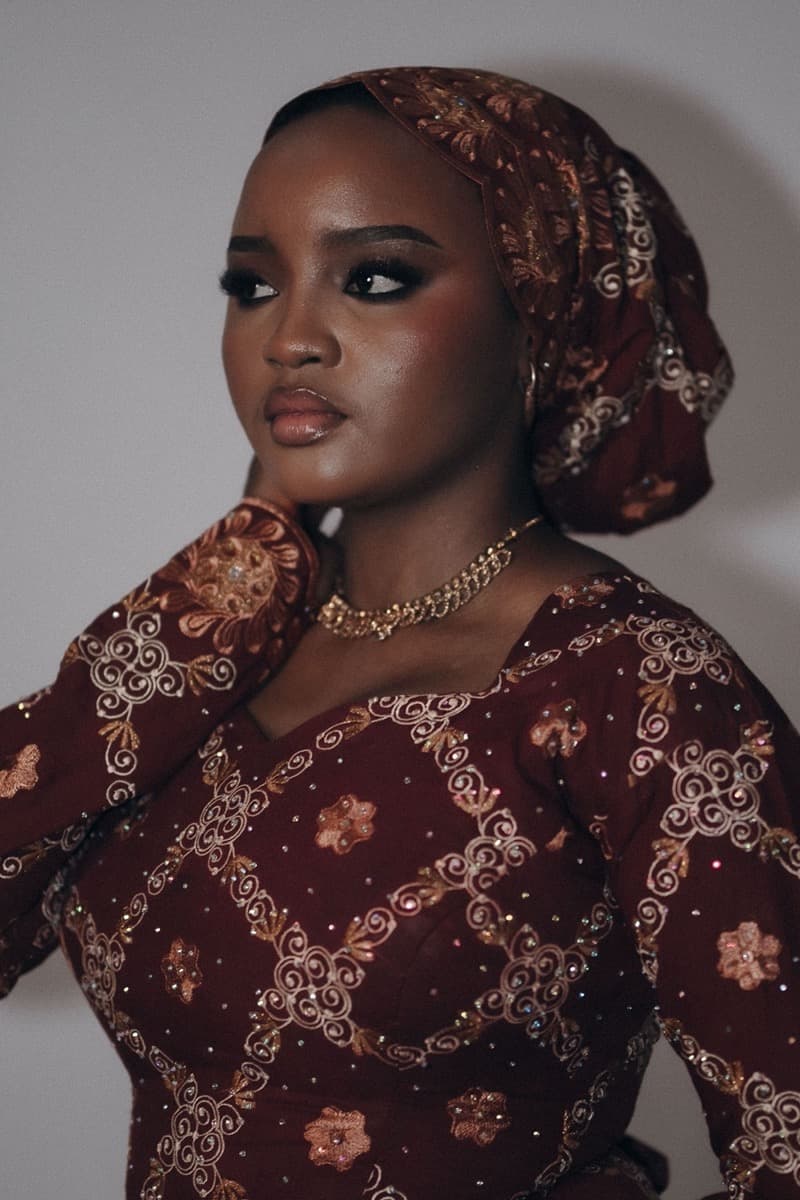
Dense, repeating embroidery like this is what separates fancy-grade George from the plainer, cheaper end of the market.
A Real, Unresolved Question: Igbo Fabric or Kalabari Fabric?
This is worth stating plainly rather than picking a side, because the sources genuinely diverge. Popular Nigerian fashion content routinely frames George as primarily an Igbo fabric. Meanwhile, serious ethnographic scholarship — published academic research on Kalabari cut-thread cloth and cultural authentication in the Niger Delta — is centered specifically on the Kalabari people's deep, well-documented relationship with the same imported cloth, which they call injiri rather than George. Both are legitimate: several Niger Delta and southeastern Nigerian groups — Igbo, Ijaw, Ibibio, Efik, Itsekiri among them — genuinely embraced this imported textile, and it's not our place to declare one community the "real" originator over another. The honest framing is that this is a shared, multi-community textile tradition with different names and different depths of documented practice in different places.
The exact timeline is similarly unsettled: one academic-adjacent source on Kalabari cloth places the adoption as early as the 1500s, while the Leiden research points to the 18th century, and lower-tier fashion content cites the 1920s-1980s for its spread into mainstream Nigerian ceremonial fashion. We're reporting all three ranges rather than collapsing them into a single confident date, because the sources don't agree.
Pelete Bite: The One Genuinely Kalabari-Specific Innovation
Where the sourcing does converge cleanly is on pelete bite, or "cut-thread cloth" — a technique that is specifically and originally Kalabari, not a general Niger Delta or Nigeria-wide practice. It's made by manually cutting and pulling individual threads out of imported injiri cloth with a needle and blade to create motifs, typically against indigo, red, burgundy, or dark green backgrounds offset with white, yellow, or black thread work. This isn't just decorative cloth — it's documented as being used for wrappers, for masquerade face coverings, and for dressing a deceased female elder's funeral bed. This is real, specific, and well-sourced enough to state with confidence, unlike a lot of the broader origin-story material.
How It's Actually Worn
The clearest documented context is the Iria ceremony — a genuine rite-of-passage festival among the Ijaw peoples of Rivers State, specifically the Ibani kingdoms (Kalabari, Okrika, Opobo, Ibani groups), marking a girl or woman's progression through stages of womanhood. An initiate is called an Iriabo, and the attire escalates with each stage: younger initiates (roughly ages 12-15) wear a single wrapper called Suu with light beads; an older stage (18-21+) adds a waist wrapper called Ikaki paired with popo or damask fabric; and the highest-honor stage, reached around age 40, wears what's documented as the "intorica George wrapper" alongside a wrapper called "lili-inji." Worth flagging: these specific term spellings come from Wikipedia and Nigerian press coverage (Daily Trust), not peer-reviewed ethnography, so treat them as reported rather than definitively verified transliterations.
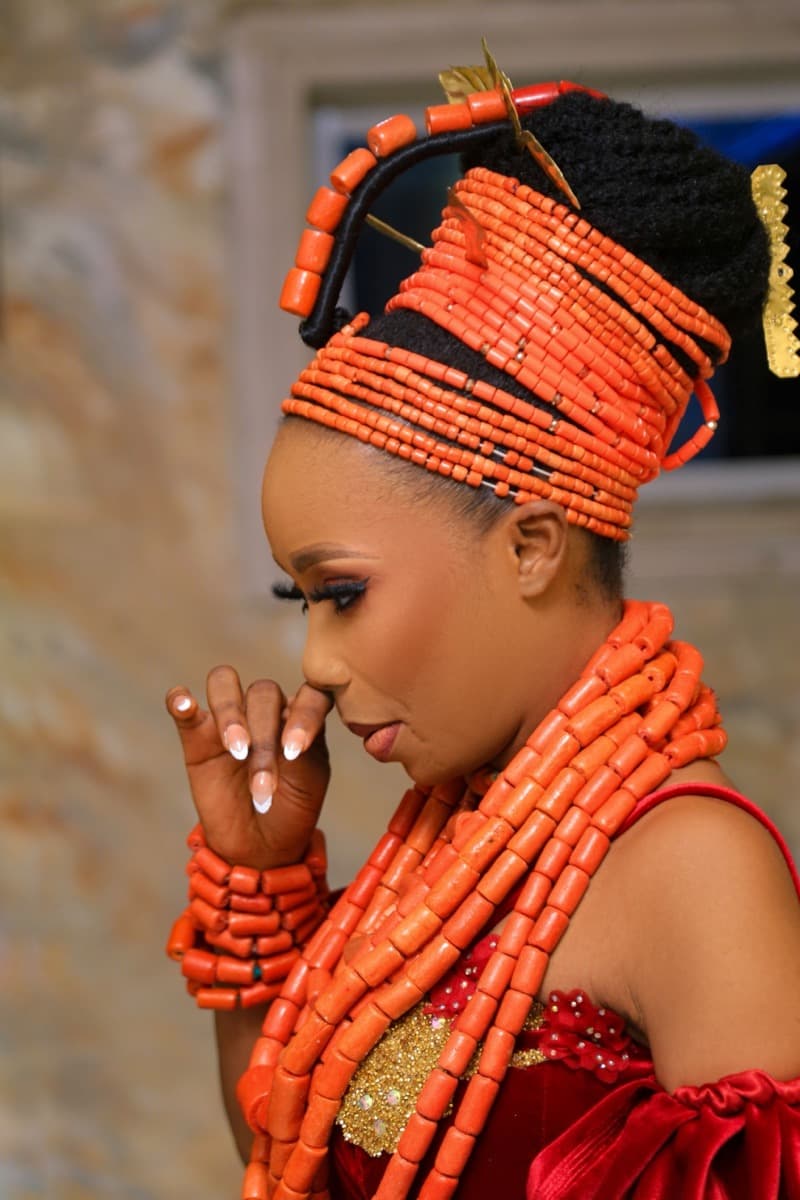
Beyond Iria specifically, Urhobo, Ijaw, and Itsekiri women are documented wearing double wrappers of George paired with lace blouses and coral bead accessories, and among the Efik and Ibibio, George features in the Mbopo (fattening room) ceremony that prepares young women for marriage. The elaborate coral headpiece and layered necklaces pictured above are part of that same regalia tradition — coral beads carry real ceremonial weight across Niger Delta dress, independent of which specific fabric they're paired with.
Where the Trend Claims Run Thin
We're not going to hand you a "George is trending in 2026" narrative we can't back up. We looked specifically for a real, documented fashion-press moment — a runway show, a named collection, a credible editorial feature — built around George fabric, and didn't find one. Kenneth Ize, Nigeria's most internationally documented textile-forward designer, is verifiably known for aso oke, not George; one supply-chain mention ties an Austria-based embroidery supplier serving Nigerian designers to both lace and George sourcing, but that's not the same as Ize himself working in George. We also couldn't verify any nationally recognized designer with a specific, documented George specialization. The honest state of things: George right now is largely a textile-and-market story — driven by fabric traders and boutiques rather than a named-designer fashion narrative — not a current runway trend.
What to Budget
Pricing here comes from Nigerian retail marketplace listings rather than an official price index, so treat these as a recent snapshot, not a fixed rate: general George fabric on marketplace listings starts around ₦15,500, 2-in-1 Indian George wrapper sets from roughly ₦22,000, Indian George fabric specifically from around ₦50,000, and Nigerian George lace (5 yards, cotton lace) running roughly ₦51,000-₦55,000. Embroidery density and hand versus machine work move these numbers significantly — get an actual price from whoever you're buying from.
Ordering Yours
Because George spans several distinct community traditions — Kalabari injiri and pelete bite, Ijaw Iria-ceremony wrappers, Efik and Ibibio ceremonial use — it's worth telling your tailor which specific styling context you're dressing for, since that shapes fabric weight, pattern, and how it's paired with beads or a blouse. If you're weighing it against other Nigerian textile traditions, our aso oke and adire guides cover two of the other major options.