



Isiagu: The Igbo Traditional Wear Everyone Recognizes but Few Explain Right
2026-08-08
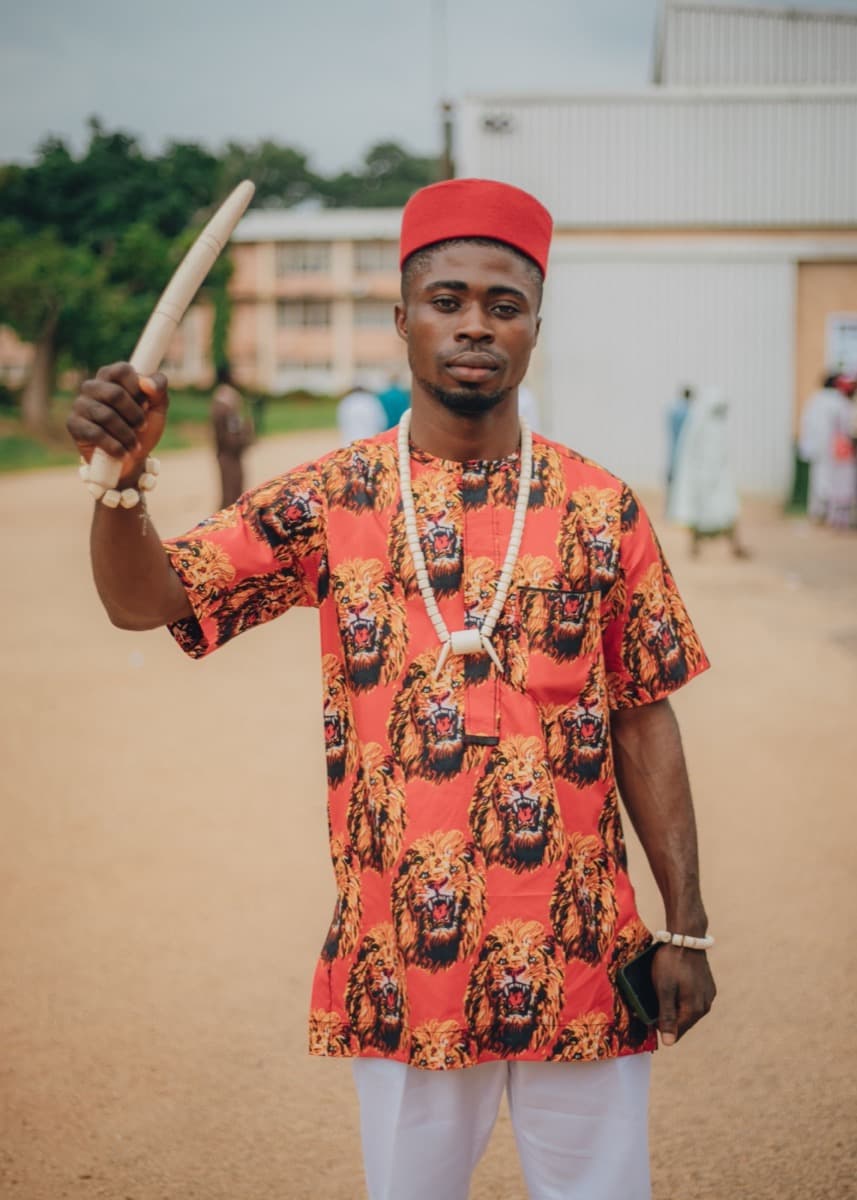
Isiagu is one of the most visually recognizable pieces of Nigerian traditional dress — a dark fabric printed or embroidered with a gold animal-head motif, worn as a fitted shirt or tunic. It's also a piece where a lot of casual write-ups quietly disagree with each other on basic facts, starting with what animal is actually on the fabric. Here's what's genuinely documented, and where we're going to flag a real conflict instead of picking a side to sound more authoritative.
What the Name Actually Means — and the Lion-vs-Leopard Problem
"Isiagu" breaks down as isi ("head") plus agu. This is where sources split: several linguistic and cultural sources argue agu specifically means leopard in Igbo — with lion instead being odum — and that the garment's name literally translates to "leopard head." Under this reading, the leopard was historically the more feared, more culturally significant animal in Igbo forests, and killing one was an act of valor carrying its own honorific title. Other sources, including a large share of retail listings and casual style coverage, simply call it "lion head" fabric with no leopard caveat at all, and the printed motif itself is commonly rendered and described today as a lion's mane and head.
We're not going to resolve that conflict for you by picking whichever answer sounds better — it's a genuine disagreement between real sources, and both readings show up constantly in how people actually talk about the fabric today.
The Full Ensemble, Not Just the Shirt
The isiagu shirt itself is typically a fitted tunic, long- or short-sleeved, sometimes with a breast pocket and gold buttons linked by a chain as embellishment. It's paired with tailored trousers, or alternatively with a wrapper of "George" fabric tied at the waist instead of trousers. A cap completes the look — usually a red cap, or a version made from the same leopard/lion-print material — and coral beads at the neck and wrists are commonly worn alongside it, historically associated with royalty and titled persons, though we couldn't find rigorous sourcing pinning down exactly how far back that association goes. Some styling for titled men also includes a walking stick, though that detail is more consistently tied to Igbo titled-man regalia broadly than to isiagu specifically.
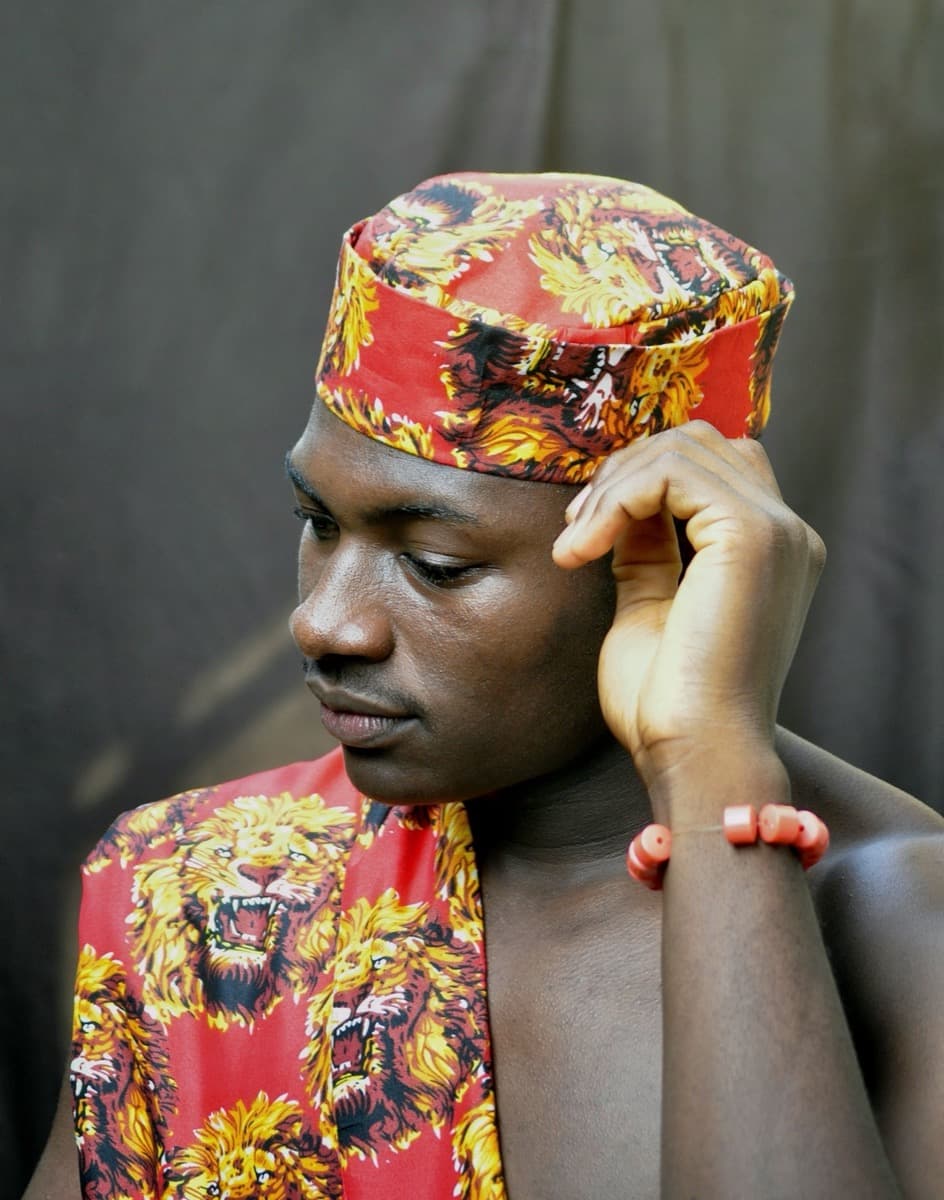
The motif that gives the fabric its name — rendered here in raised gold thread against a dark background.
Where It Comes From, and What We Can't Confirm
Isiagu's connection to chieftaincy is the best-supported historical claim here: it was traditionally conferred on a man upon receiving a chieftaincy title, marking elevated status, and that specific connection is consistent across multiple sources. Beyond that, you'll see two claims repeated a lot in casual cultural write-ups — that the style fused indigenous Igbo tailoring with Victorian shirt-making and missionary dress in the late 19th century, and that its popularity specifically surged after the Nigerian Civil War as a form of cultural reassertion. Neither of those claims traces back to a primary historical or academic source we could verify — they show up in blog-style cultural summaries without citations. Worth knowing, but treat them as commonly repeated belief rather than settled history.
Isiagu and the Wider System of Igbo Titled Dress
Isiagu doesn't exist in isolation — it sits inside a broader system of Igbo titled-man regalia that includes the red cap tradition (red specifically reserved for chiefs and titled men, with other colors worn by non-titled people) and the eagle feather, attached to the cap as a marker of induction into the Nze na Ọzọ title society, with the number of feathers indicating rank. Sources describe these elements — the shirt, the cap, the feather, the beads — as overlapping parts of the same broader "titled man's dress" rather than as cleanly separate, independently defined systems, so it's more accurate to think of isiagu as one component of that dress than as a fully self-contained tradition.
From Chieftaincy Regalia to Everyday Wear
The clearest, most consistently documented current trend is that isiagu's use has broadened well past its original chieftaincy context — it's now regularly worn by non-titled people, by women, and at weddings and general cultural celebrations, not just formal title ceremonies. That shift shows up consistently across independent sources rather than being a single writer's claim. Beyond that general broadening, we couldn't find genuinely current (2025/2026) fashion-press coverage with specific, dated trend claims to report — most of what's searchable is either several years old or commercial styling-gallery content we can't verify as more than a sales listing, so we're deliberately not inventing a "what's new this year" narrative we can't back up.
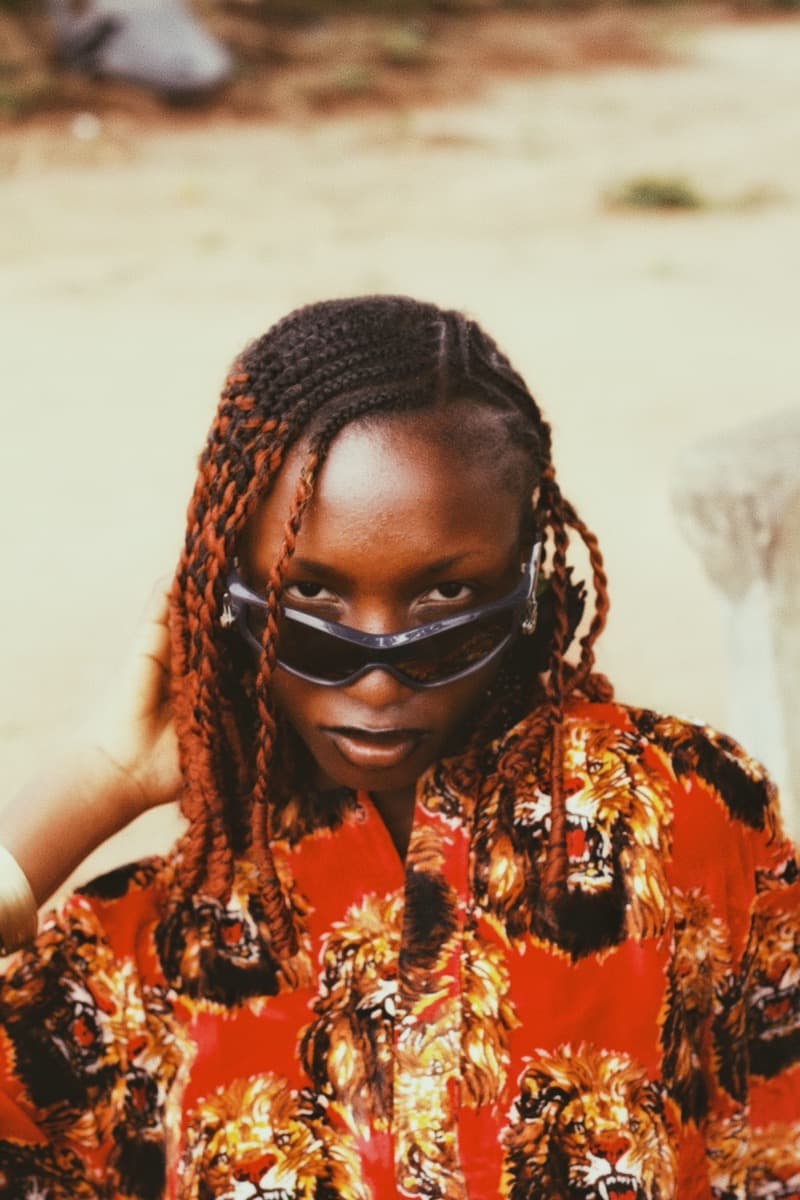
The same lion-head print fabric, styled as contemporary streetwear rather than formal chieftaincy dress — part of the broader shift in who wears isiagu and when.
Fabric
Velvet is the fabric most consistently cited as traditional for isiagu, with cotton, silk-blend, and brocade versions all commercially available today as more accessible alternatives. The animal-head motif is typically rendered in gold or metallic thread or print against a solid, usually dark, background.
Designers Worth Knowing
We're not going to hand you a name here. We searched specifically for a real, independently documented Nigerian or Igbo designer known specifically for isiagu, and came up with nothing beyond retail listings and small commerce sites we couldn't independently verify as notable. If you're shopping for isiagu, that likely means working directly with a tailor experienced in the fabric rather than chasing a specific designer name — this isn't a category with a well-documented signature-designer story the way aso oke or agbada has.
Occasions
This is the most reliably cross-sourced part of the research: chieftaincy and coronation ceremonies (the original, core context), weddings — especially for grooms — cultural festivals and community celebrations, and increasingly, general formal wear outside strictly ceremonial settings.
What to Budget
Pricing here comes from a buyer's-guide source and retail listings rather than a broad market survey, so treat these as indicative, not authoritative: locally made cotton isiagu starts around ₦15,000, with hand-embroidered velvet versions running up to roughly ₦80,000. Fabric by the yard has been cited anywhere from ₦12,000-₦100,000 depending on quality, with velvet specifically around ₦12,000/yard. General native-wear tailoring labor separately runs roughly ₦10,000-₦30,000 at standard rates — though we also saw one social-media example of a tailor charging far above that for an elaborate two-piece isiagu, a reminder that embroidery complexity and tailor reputation can move the price well outside any "typical" range. Get an actual quote once you've picked fabric and design.
Ordering Yours
Because isiagu doesn't have a single fixed structure the way some other traditional outfits do — trousers or a George wrapper, long or short sleeves, how much embellishment — bring your tailor a clear sense of which version you want. If you're weighing it against other Nigerian formal-wear traditions, our guides to agbada and senator wear cover the other major menswear options.