



Latest Agbada Styles for Men
2026-08-08
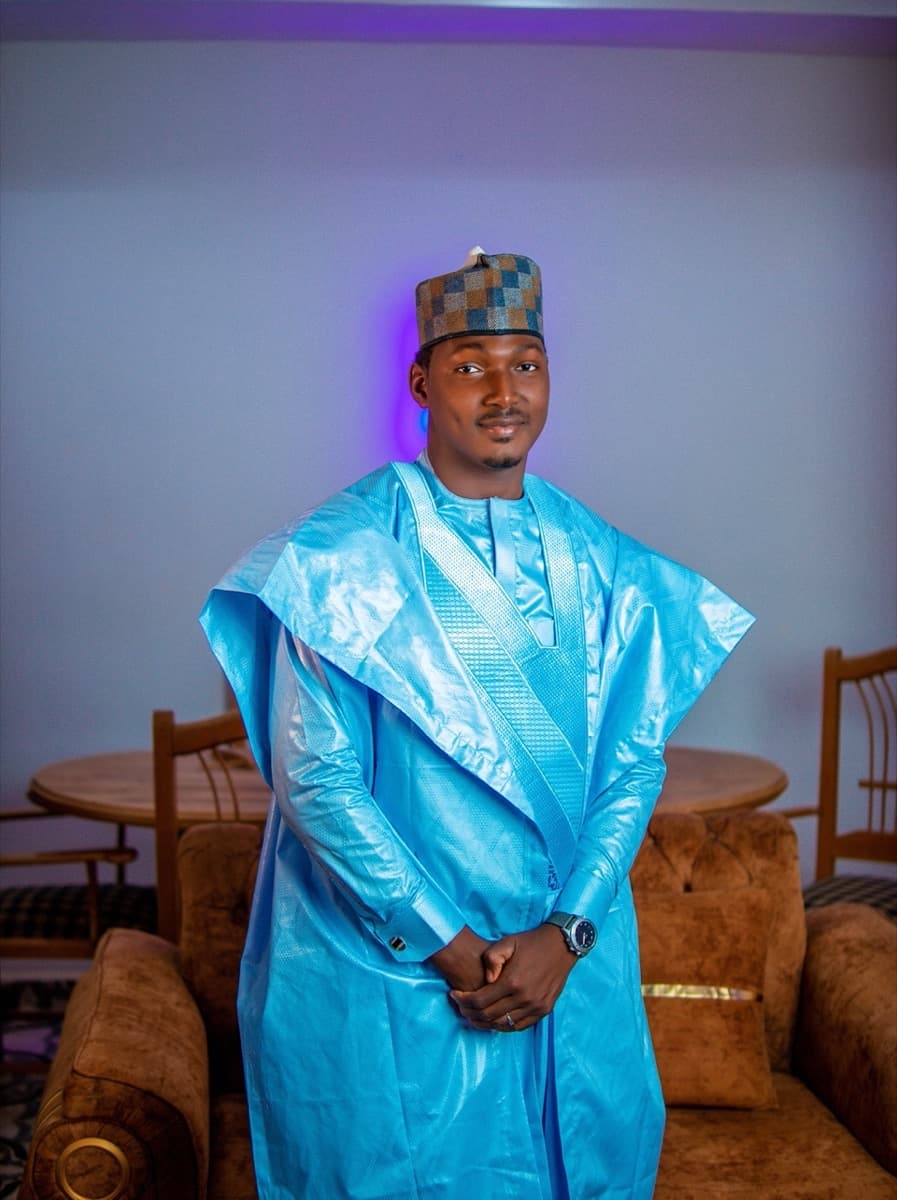
An agbada isn't one garment — it's four: a wide, flowing outer robe, an inner shirt, drawstring trousers, and a cap, worn together as a set. What most people call "the agbada" is really just the outer piece, the most visible part of a full Yoruba formal outfit with centuries of status and royal history behind it.
Here's the real structure, the fabric it's built from, and what's trending right now.
The Four Pieces That Make an Agbada
- Awosoke — the large, free-flowing outer robe, cut wide and loose with dramatic sleeves. This is the piece everyone pictures when they hear "agbada."
- Buba or dansiki — the inner layer worn underneath. A buba is a loose, round-neck shirt with elbow-length sleeves; a dansiki is similar but sleeveless.
- Sokoto — the trousers, drawstring-waisted. The close-fitting, ankle-length version is called sooro; the looser, wide-bottomed version is kembe.
- Fila — the cap, with several named styles: gobi (cylindrical), abetiaja ("dog-eared," with flaps), and labankada.
Historically, a full agbada set was reserved for kings, chiefs, elders, and wealthy merchants — a real status marker, not just formalwear. The exaggerated width of the outer robe's sleeves was deliberate: worn loose and let to move with the body, the volume was meant to physically enlarge and dignify the wearer's presence, and to emphasize movement — you're meant to see the robe move when the wearer does, not have it hang flat and static.
Two Real Categories: Iwole and Amurode
Yoruba dress historically drew a real distinction between two kinds of agbada: agbada iwole (sometimes called the "Sapara" style, after Dr. Oguntola Sapara, who popularized it in the 1920s) is the lighter, shorter, more casual version. Agbada amurode is the larger, more ornate ceremonial version, cut fuller and made in more expensive fabric. If a tailor asks which one you want, this is the distinction they're asking about — not just "formal vs. casual" in the abstract, but two genuinely different, named cuts.
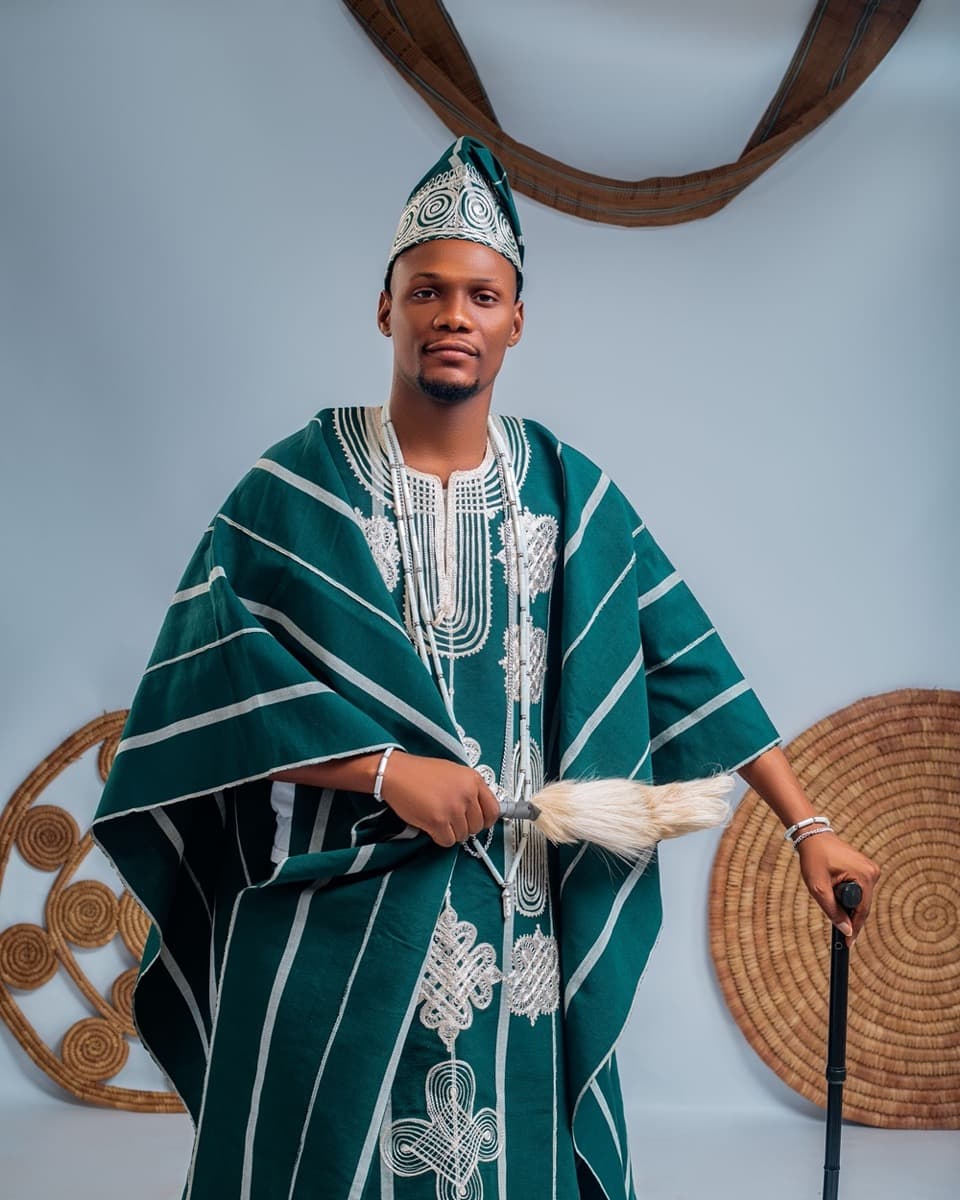
A full amurode — heavily embroidered, paired with a fly-whisk and cane, the traditional markers of chieftaincy and ceremonial status.
Fabric and Construction
The premium, traditional fabric is aso oke — the same handwoven strip cloth covered in our aso oke guide, with alari (deep red), sanyan (brown/beige), and etu (indigo) among the named varieties historically used for agbada specifically. Modern agbada is also commonly made in brocade, damask, velvet, lace, and cotton, often finished with embroidery or beadwork on top.
Construction is genuinely different from a women's aso oke gown. Where a fitted women's gown shapes the strip-woven panels around the body, an agbada is built around a wide rectangular panel with the sleeves as flared extensions — cut for volume and movement, not for a fitted silhouette. That's a structural difference, not just a style choice: the whole point of the cut is the loose, flowing drape and the way the sleeves catch movement, which is also why aso oke's stiffer, coarser handwoven texture actually suits agbada more naturally than it suits a fitted gown.
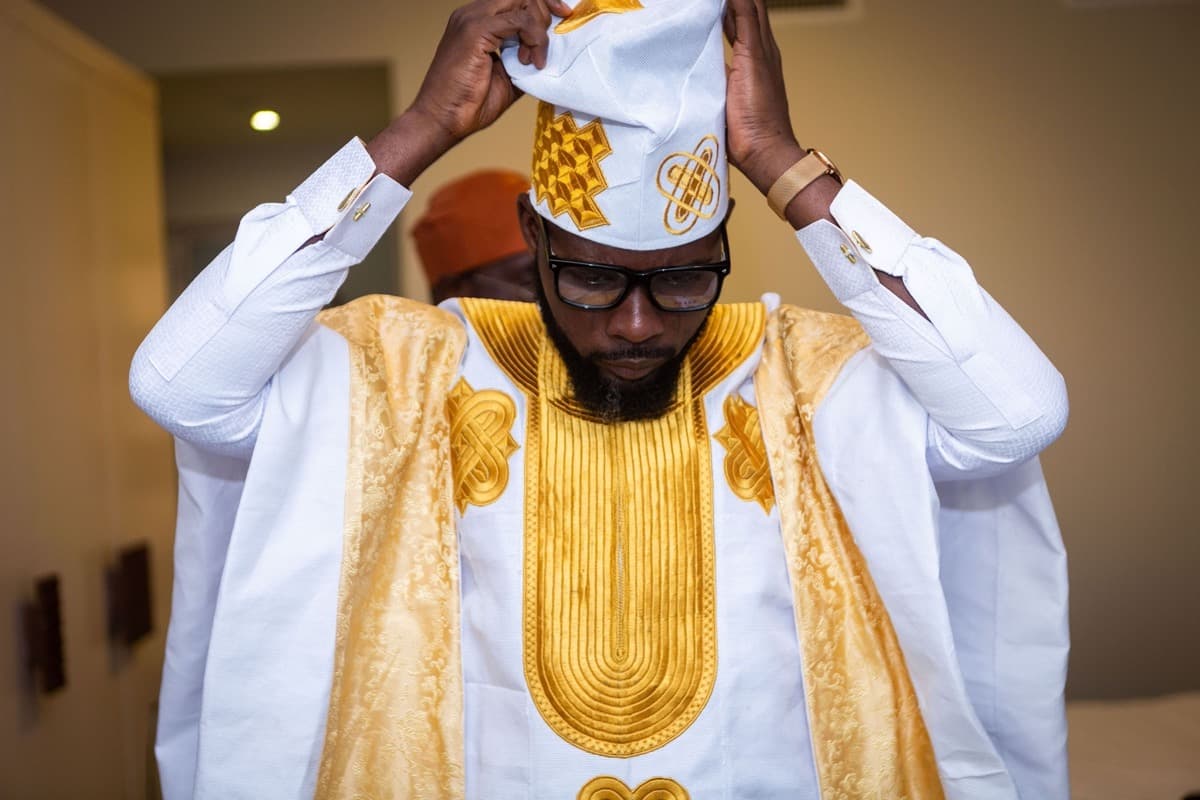
The chest panel is where the embroidery does the most work — dense, raised gold threadwork against plain fabric.
What's Trending
Real Lagos Fashion Week-era coverage points to a few consistent threads: a slim-fit, tailored agbada — closer to the body than the traditional voluminous cut — has become a common choice for grooms and formal events, alongside the classic full-volume version. Navy blue embroidery is showing up as a leading color choice across agbada, kaftans, and bridal wear alike. There's also a real cross-pollination trend — agbada silhouettes picking up embroidery motifs from Northern Nigerian dress, collar details associated with Igbo formalwear, or even kimono-influenced sleeve shaping, blending regional dress traditions into one piece rather than staying strictly within one region's conventions.
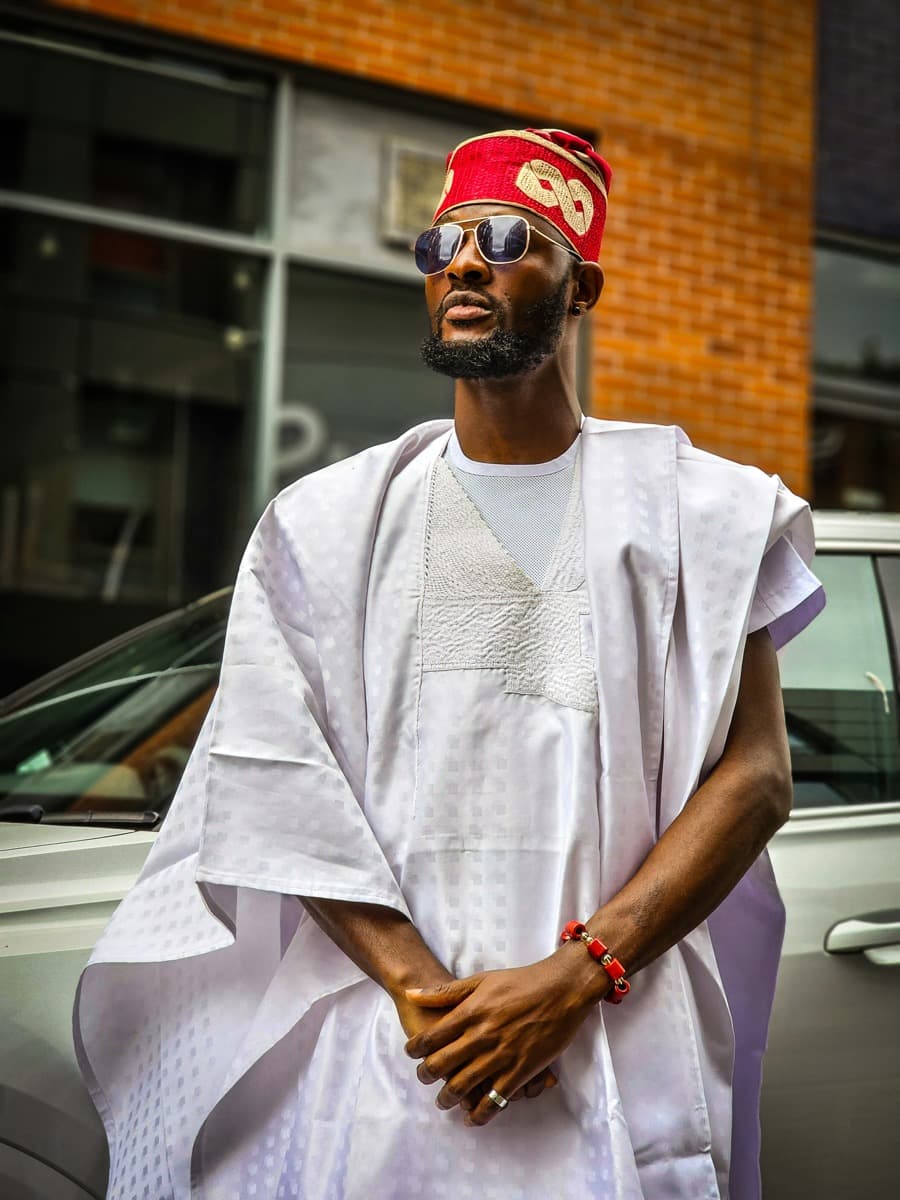
Sleeves folded back rather than left to drape fully — a simple styling choice that reads noticeably more tailored than the cover photo above.
Designers Worth Knowing
Ugo Monye is the clearest agbada-specific name to know — his "Reale" collection, a slimmer, kimono-influenced reinterpretation of the traditional three-piece structure, went viral in 2017 when TV host Ebuka Obi-Uchendu wore one to a high-profile Nigerian wedding. It's a real, well-documented example of agbada being reinterpreted for a more tailored, contemporary silhouette rather than left purely traditional.
What to Budget
Pricing here is genuinely hard to pin down from reliable sources — most figures in circulation come from general retail/aggregator sites rather than fashion press or tailor associations. As a soft reference point, tailors and fabric retailers commonly cite somewhere in the ₦50,000-₦200,000 range for a finished agbada set, with wide variation depending on fabric choice, embroidery, and location. Treat that as a rough starting point for a conversation with your tailor, not a fixed price.
Caring for Your Agbada
Agbada's wide sleeves and heavy front embroidery call for a bit more care than a plain garment:
- Iron with a pressing motion rather than sliding the iron across the fabric, and iron embroidered sections inside-out or with a pressing cloth to avoid flattening the raised threadwork.
- For pieces with dense embroidery or beading, fold rather than hang — the weight can pull and distort the fabric over time if left on a hanger.
- When folding, keep the embroidered panel facing outward against plain fabric rather than creased against itself, and use tissue paper as a cushioning layer if you're storing it long-term.
- Store in a breathable fabric garment bag rather than plastic, and avoid packing it tightly against other clothes, which crushes embroidery into hard creases.
Ordering Yours
Whether you go with an aso oke amurode for a wedding or a lighter, slim-fit iwole for everyday formal wear, it's worth telling your tailor which category you're after by name — it changes the fabric weight, the cut, and how much embroidery makes sense. If you're deciding between fabrics, our guides to aso oke and kaftan and babban riga cover the other options.