



Aso-Ebi: What It Actually Is, and Why It's Become a Real Financial Debate in Nigeria
2026-08-09
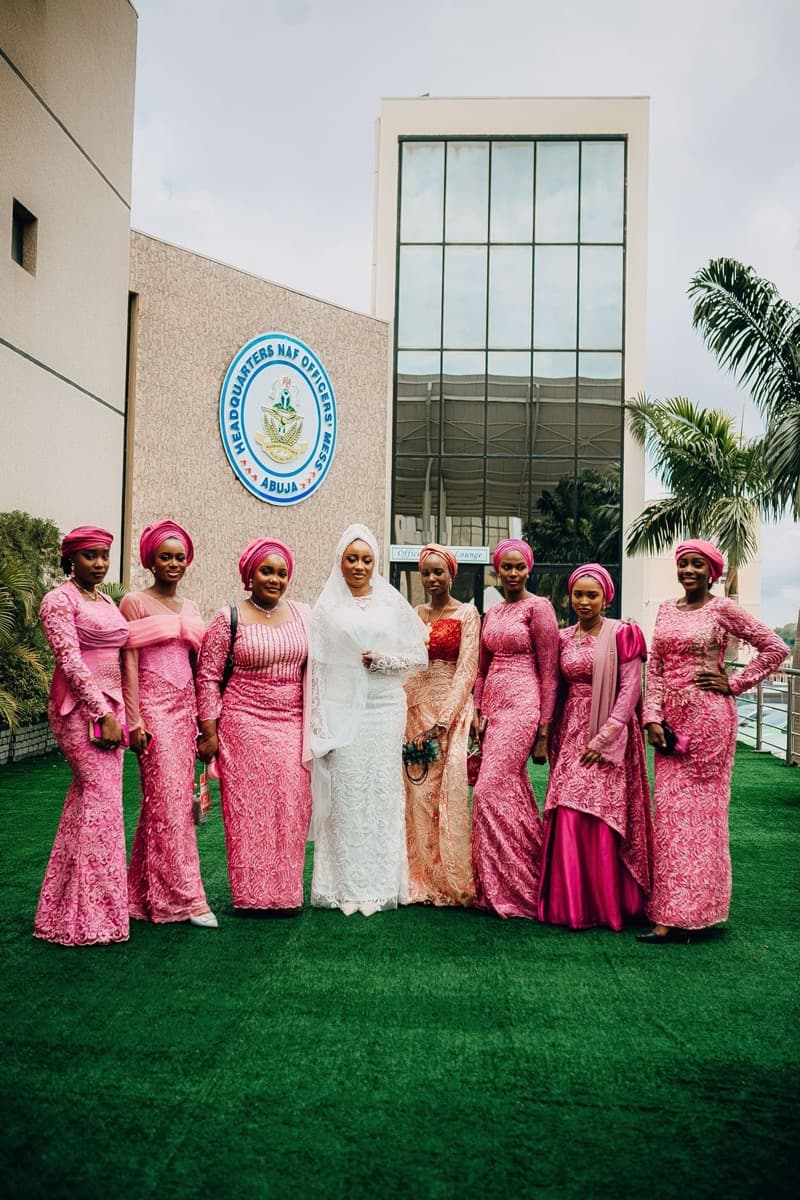
Aso-ebi — guests at a Nigerian wedding, funeral, or birthday all wearing the same fabric or color, each tailored into their own individual style — is so normalized in Nigerian social life that it rarely gets explained from first principles. It also has a real, published academic literature behind it, including a genuine survey study on why it's become a source of financial stress. Here's what's actually documented, cost debate included.
What the Word Means, and How It Actually Works
"Aso-ebi" is Yoruba: aṣọ means cloth, ẹbí means family — together, "family cloth." In practice today, a celebrant, their family, or a designated coordinator selects a fabric or color, and guests or group members buy yardage of it — often through the celebrant directly, or through a fabric vendor offering bulk rates and consultation — then have it tailored into their own individual design rather than an identical uniform. That vendor-coordinator role shows up constantly in wedding-planning guides, though we couldn't find rigorous, independent documentation of exactly how formalized or widespread it is as a distinct commercial profession — treat it as commonly described rather than academically measured.
A Real, Multi-Stage History — Not One Clean Origin Story
This is one of the better-documented topics we've covered, with named scholars rather than just SEO content behind it, though the exact dates still aren't fully settled. Folklorist William Bascom traced its roots to an earlier, undated period when Yoruba age-grade members wore uniform dress to mark fraternal bonds. Historian Ayodele Olukoju instead identifies aso-ebi as emerging as a specific novelty in the 1920s, during a post-World War I economic boom driven by elevated oil palm prices — new commercial wealth funding a new social practice. A 2024 academic piece by Susan Olubukola Badeji, a lecturer at Redeemer's University, describes it as rooted in precolonial kinship practices in southwest Nigeria, initially restricted to blood relatives, with a documented shift "from emphasizing kinship to communicating social worth" beginning in the early 20th century.
From there the timeline is clearer: women's social groups began wearing matching dress to relatives' ceremonies in the 1950s, marking the shift from strictly family-based aso-ebi to friend-group participation. Imported lace and George fabric entering Nigerian markets in the 1960s and 70s expanded material options beyond handwoven aso oke and accelerated the practice's spread, and Nollywood films and celebrity weddings from the 2000s onward pushed it into a genuinely national — and increasingly diaspora — phenomenon.
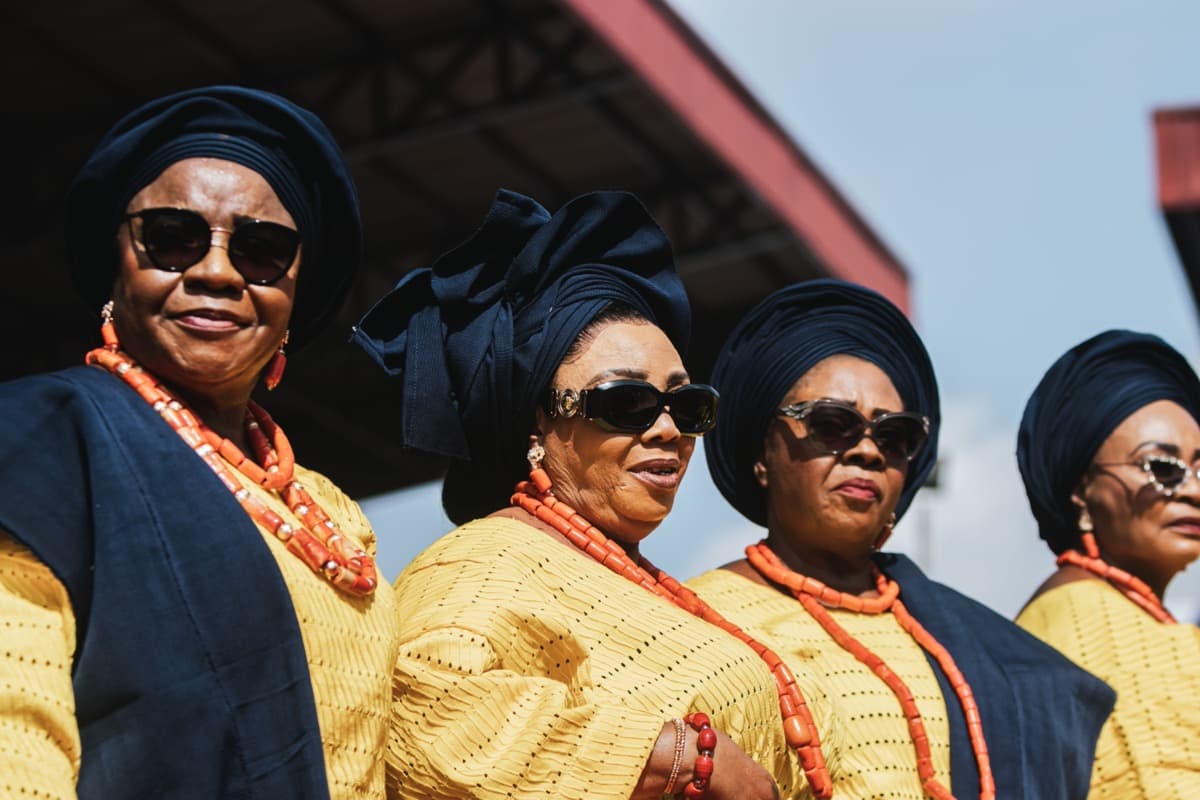
The same fabric and color, individually styled — the core mechanic of aso-ebi hasn't changed even as the fabrics and silhouettes have.
The Part Nobody Argues About: It's a Real Financial Stress Point
This isn't us inferring a criticism — it's a documented academic finding. Badeji's 2024 research, based on a survey of 270 Yoruba adults across Osun and Oyo states, found the financial burden of continuously buying fabric was the top-cited problem, with guests reporting little choice or bargaining power over price, fabric that often clashes with personal taste, and a documented dynamic of "unhealthy flamboyant competition" between groups. Her own figure: some aso-ebi costs as much as ₦150,000 per wedding, and the norm is not to repeat an outfit once worn — attend seven weddings in a year at that rate and you're over ₦1 million in aso-ebi spending alone. A separate academic study on the social construction of aso-ebi in southwest Nigeria reportedly examines the same dynamic from a sociological angle, including the awkwardness of being visibly excluded at an event by not wearing the group fabric.
You'll sometimes see "aso-ebi wahala" used online as a catch-all phrase for this stress — worth knowing as real colloquial shorthand, but it's not a formally documented term from any specific study, so we're not going to attribute it to one.
What's Actually Trending in 2026
Current Nigerian wedding and fashion-trend coverage points to royal blue, midnight blue, and a range of purples — lilac, plum, deep purple, lavender — as leading 2026 aso-ebi colors, alongside a return to body-conscious silhouettes: mermaid cuts, bodycon midi dresses, fitted co-ords, structured corsets, and reworked iro-and-buba. Ankara mixed with denim, lace, or leather is also showing up as a current fabric-fusion trend. The clearest structural shift, though, is toward "matching but not identical" styling — guests using the same aso-ebi fabric but personalizing cut, sleeves, and embellishment rather than wearing uniform dress. That shift is consistently described across current wedding-guide content, though we couldn't find one authoritative fashion-press piece treating it as a formally tracked, named trend — so we're reporting it as a real, current, broadly observed shift rather than something with a precise start date.
There's also a real, current pushback trend worth naming directly: growing resistance to high aso-ebi costs, with some brides and guests turning to reusing or renting outfits instead of buying new fabric for every event — a commercial response that lines up directly with the cost-burden research above.
A Real, Named Example of the Cost Conversation
Nigerian TikTok personality Peller publicly announced a roughly ₦700,000 aso-ebi fabric cost for around 400 guests ahead of his 2026 wedding, covered by Punch Nigeria — a genuinely sourced, dated, named data point. It's a celebrity outlier, not a typical cost, but it's a real, current illustration of exactly the financial-burden conversation the academic research describes.
The One Platform Actually Worth Naming
AsoEbiBella, syndicated through BellaNaija, is the one aso-ebi-specific platform we could independently verify as a real, long-running, notable institution — a user-submission gallery where people upload their aso-ebi looks (via the site or the #AsoEbiBella hashtag) for a chance at being featured, with a dated post archive going back years. Several other vendor names come up in searches, but we couldn't independently verify their scale or credibility beyond their own marketing, so we're not naming them here as if they were established authorities.
Occasions
Consistently documented beyond weddings: funerals, birthdays and anniversaries, naming ceremonies, chieftaincy and title-conferment ceremonies, and political rallies. Church events show up constantly in casual conversation about aso-ebi, but we didn't find that specific context directly documented in the sources we checked — plausible, but we're flagging it as inference rather than a sourced claim.
What to Budget
Reported 2026 ranges from wedding-planning sources: aso-ebi fabric alone runs roughly ₦25,000-₦150,000 per person depending on fabric type and quality, with 6-yard fabric specifically cited around ₦15,000-₦65,000, and tailoring adding another ₦5,000-₦20,000+ depending on style complexity. Treat these as reported guide-site ranges rather than hard market data — there's no verified total figure for aso-ebi as an industry, so we're not going to hand you one.
Ordering Yours
If you're the one selecting the fabric for your own event, the current trend toward "same fabric, different design" gives your guests real flexibility without losing the coordinated look — worth mentioning explicitly when you share the fabric, since not everyone wants an identical cut. If you're the guest, our George fabric, aso oke, and ankara guides cover the most common aso-ebi fabric choices in more depth.