



Lace Fabric in Nigeria: The Real Austria-to-Abeokuta Story Behind It
2026-08-09

Lace is everywhere in Nigerian formal fashion — weddings, owambe, church events — and yet the actual supply chain behind it is a genuinely interesting, well-documented piece of international trade history that most casual coverage skips entirely. Here's what real research (an academic study specifically on this trade, not just fashion-blog repetition) says about where it comes from, what the different names actually mean, and what's real about current pricing and trends.
A Real Technical Correction: "Lace" Isn't Always Lace
What's sold in Nigeria as "Austrian lace" or "Swiss lace" is, technically, not lace in the traditional bobbin-or-needle sense at all — it's schiffli embroidery, machine-stitched decorative work on a cotton, sateen, or linen base fabric, per academic textile research. That's a real, sourced technical distinction worth knowing even if the market-wide "lace" naming isn't going anywhere. Guipure lace, by contrast, is closer to true lace construction — motifs connected by bars or plaits called "brides" rather than a net ground, a French term meaning "tape." Cord lace is a heavier, corded variant with raised, three-dimensional patterns, also brides-connected rather than net-based, traditionally on a linen or silk base — in Nigerian markets, cord and guipure are often used interchangeably or combined for wedding wear. French lace tends to be denser and more structured, good for gowns that need to hold shape, while Swiss lace or Swiss voile is finer and lighter, often cotton-based, suited to flowing styles. Net lace has a genuine mesh ground, structurally distinct from the brides-based guipure and cord types.
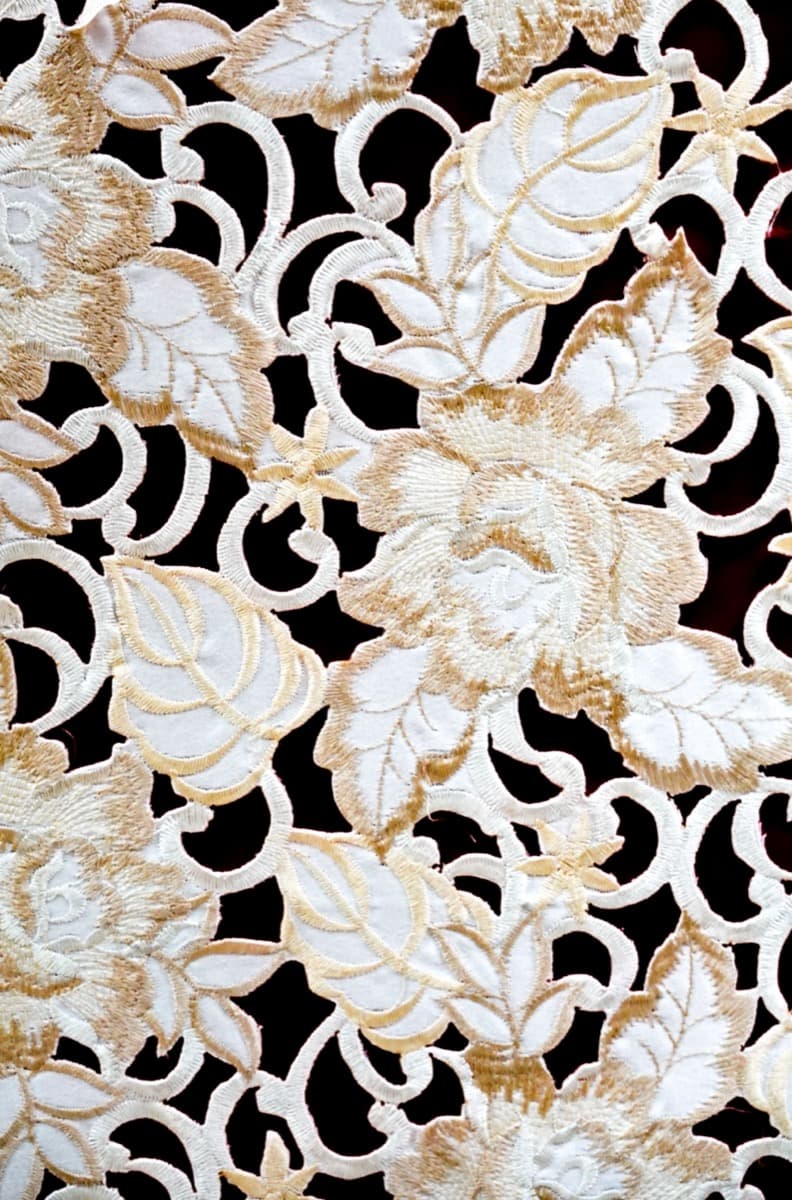
Guipure lace's raised, brides-connected motifs — the texture that separates it from flatter net lace.
The Actual Supply Chain, and a Genuinely Surprising Statistic
This textile has real, documented geographic roots: the Vorarlberg region of Austria — specifically the town of Lustenau — and St. Gallen, Switzerland, have been centers of this embroidery technique since the 18th and 19th centuries. Here's the number worth knowing: 98% of Vorarlberg's embroidery output is exported, and the overwhelming majority of that goes to Nigeria. Base cotton voile was traditionally sourced from Switzerland, with rayon embroidery yarn now largely coming from Turkey and cotton mainly from India. The supply base has genuinely diversified since — production now also happens in Korea, China, and increasingly Nigeria itself, and only two Swiss factories remain in African-lace production today, with Chinese, Korean, and Indian competitors increasingly matching quality.
How This Actually Started: A Documented 1960s Trade Relationship
This is one of the better-sourced fabric histories we've covered, with real names and dates rather than vague folk history. Lace entered Nigerian fashion during the colonial era through British, German, Dutch, Lebanese, and Indian trading houses, but the specific, direct Austria-Nigeria trade relationship dates to the 1960s, catalyzed by Nigerian independence in 1960 and the opening of the Austrian trade delegation around 1962-63 under Heinz Hundertpfund. Real, named Nigerian pioneers of the trade are documented: importer Chief Modupe Asabi Obebe ("Mama Tutu"); Prince Shafi Mobolaji Shitu, who traveled to Dornbirn, Austria in 1966 and co-founded the ANEF factory in 1972; and Chief Temitenjo Mercy Owolana, who discovered Austrian goods via London in 1970 and visited Lustenau in 1971. On the Austrian side, designer Helmut Ritter created thousands of patterns for the Lustima company through the 1960s and 70s. By the early 1970s, the fabric was indispensable for Nigerian festive and formal occasions, with Juju musicians helping popularize it through stage costumes.
There's a genuinely dramatic disruption in this history worth knowing: Nigeria's 1976-77 import ban under General Obasanjo, intended to protect local industry and conserve foreign exchange, hit this trade hard — over 90% of Austrian embroidery exports were going to Nigeria at the time. Goods were rerouted through Benin Republic to get around the ban, and two Austrian salesmen were arrested, with one imprisoned in Abeokuta. The aso ebi tradition of coordinated event fabric became economically central to lace's role in Nigerian fashion during this same period, and even the 1977 FESTAC cultural-nationalism push — which promoted handwoven aso oke as a local counterpoint — didn't displace imported lace's dominance.
Real Quality Tiers, and a Genuine Authenticity Problem
Academic research on this trade documents a real, structured quality hierarchy in the Nigerian retail market: street vendors typically sell cheaper Chinese-made goods, mid-range shops carry mixed quality, and exclusive boutiques in affluent areas carry higher-end, more authentic product. Counterfeits are a real, acknowledged issue — commercial sources describe noticeable differences in color tone, stitch spacing, and border finish on knockoffs, and note that fakes tend to copy trendy, oversized, Instagram-style motifs rather than the classical patterns (peonies, vines, Art Deco scrolls) found in authentic Swiss voile. That specific authentication detail comes from a fabric retailer rather than an independent textile lab, so treat it as informed commercial insight rather than verified science — but the broader tiered-market structure is genuinely sourced.
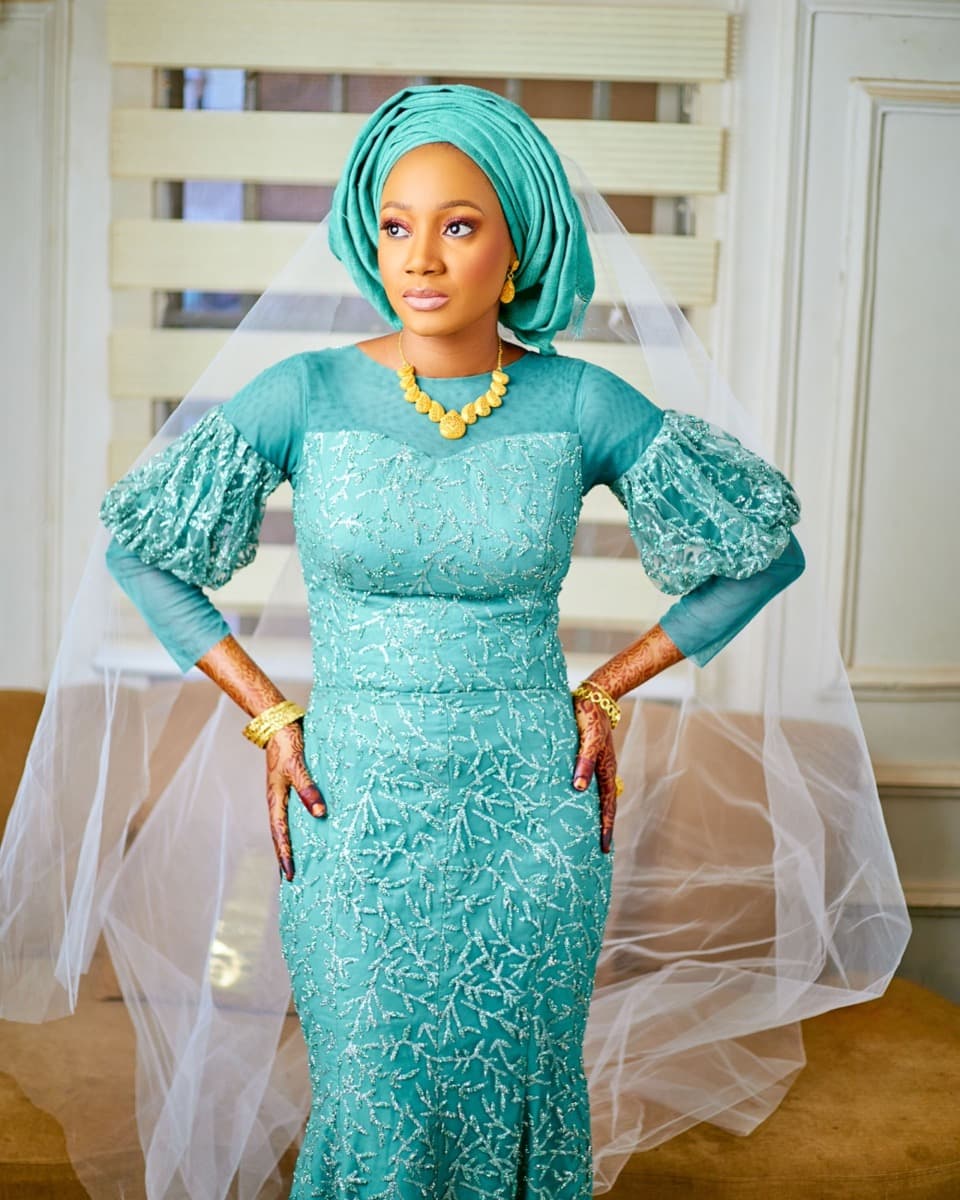
A structured, fitted lace gown holding its shape through the bodice and sleeves — the density French-style lace is chosen for.
Current Trends: Real, But Thinner Than the History
We're going to be honest that this is the weakest-sourced part of the post. One verifiable example: Nigerian fashion publication StyleRave covered a modern bridal lace gown by designer Veekee James — black, green, and purple, with a corset bodice and ombré gradients. Beyond that specific piece, we found claims about a particular designer doing 3D metallic-mesh lace work for 2025-26, and generic "chocolate and gold are trending" color claims from wedding-listicle content — neither held up to independent verification, so we're leaving them out rather than repeating unconfirmed trend claims. We also didn't find a specific, named 2025 or 2026 Lagos Fashion Week moment built around lace specifically. Worth being direct about: lace's current relevance in Nigerian fashion is a steady, foundational presence rather than something with a fresh, documentable "trending now" story this year.
One correction worth flagging: Lisa Folawiyo is frequently name-dropped in generic "top Nigerian designer" lists that get attached to lace content, but she's actually documented in fashion press specifically for embellished Ankara and wax print, not lace — we're not going to misattribute her specialty just because her name is well known.
Occasions
Weddings — both bridal wear and guest or aso-ebi wear — owambe parties, church events, and formal Southern Nigerian social occasions generally. Academic framing describes lace as operating within an "economy of prestige," tied specifically to formal and festive dress rather than everyday wear, with aso-ebi (bulk-purchased matching fabric for a group of event guests) as a specifically documented major commercial driver.
What to Budget
Reported ranges from Nigerian fashion retail sources — treat these as illustrative and genuinely volatile with currency shifts, not fixed pricing: French-style lace roughly ₦2,500-₦15,000 per yard, chantilly lace ₦1,800-₦7,500 per yard, English net lace ₦2,500-₦10,000 per yard, and higher-quality sequin lace ₦5,000-₦10,000 per yard. We found some "authentic Swiss voile" pricing circulating online, but it traced back to auto-generated SEO content rather than a real retail source, so we're deliberately not repeating it here. Get an actual quote from a fabric dealer, and be aware that price alone isn't a reliable authenticity signal given how tiered this market genuinely is.
Ordering Yours
Given how much the different lace types vary in weight and structure, it's worth telling your tailor specifically which type you're working with — a French lace gown needs different construction than something in lighter Swiss voile. If you're weighing lace against Nigeria's other major textile traditions, our George fabric, aso oke, and aso-ebi guides cover the other pieces of the picture.