



Owambe: The Real History Behind Nigeria's Biggest Party Culture Word
2026-08-09
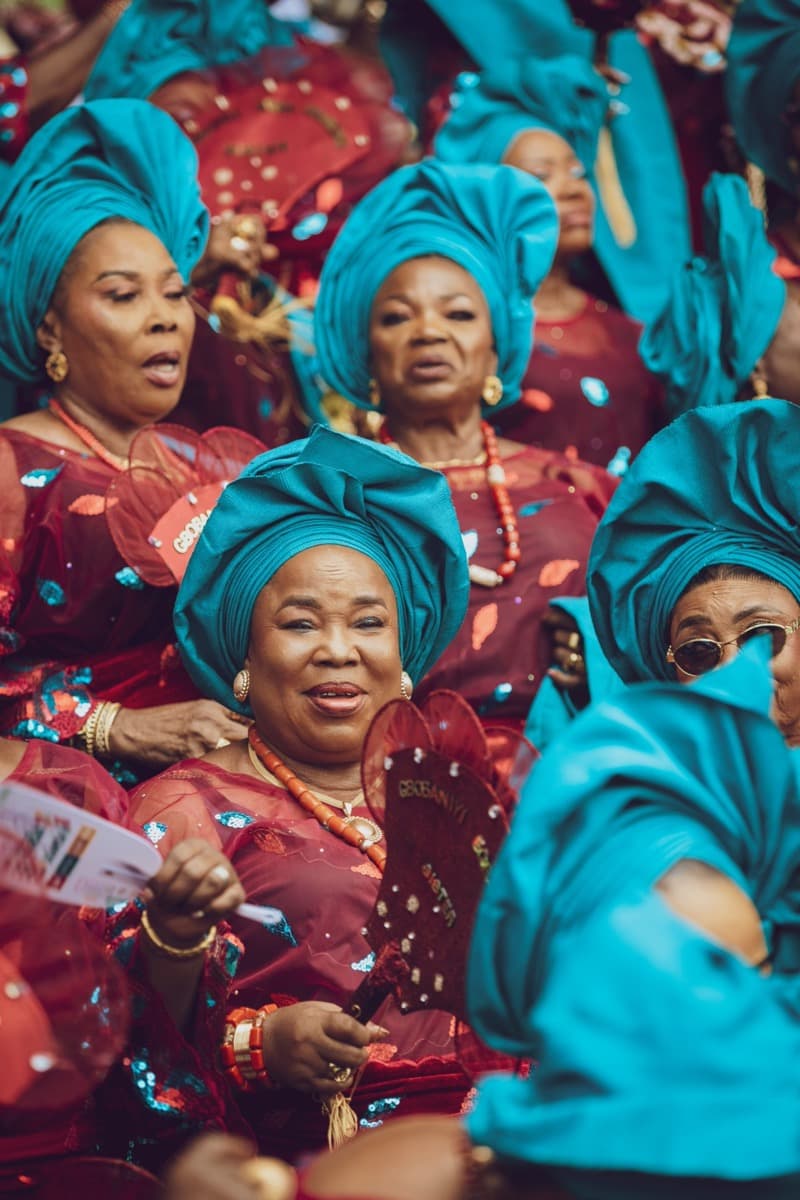
Owambe ties together nearly everything else we've covered on this blog — the aso-ebi, the gele, the lace, the agbada — because it's the actual event all of it gets worn to. It's also a word with a real, traceable origin most casual coverage gets slightly wrong, and a culture with a genuinely documented legal flashpoint most people don't realize is still actively enforced. Here's what's real.
Where the Word Actually Comes From
The best-sourced etymology traces "owambe" to the Yoruba phrase ó wà ní ibẹ̀ — roughly "it's happening there" or "the place where it's at." More specifically, the term's coinage is credited to the band of juju musician Tunde Nightingale, active from the 1940s, whose sound became known as "owanbe sound" and got tied to club and party life in urban western Nigeria, alongside contemporaries like I.K. Dairo and Ebenezer Obey. Worth knowing: "owanbe" (not "owambe") is technically the more linguistically correct spelling, even though "owambe" has become the dominant spelling in everyday and journalistic use. There's also a real, contested view worth flagging rather than ignoring — one Nigerian commentator has pushed back on framing owambe as ancient "Yoruba culture" at all, arguing it's really mid-20th-century Lagos urban slang, and that ayẹyẹ is the more rooted Yoruba word for celebration generally. That's a genuine live disagreement, not a settled point, so we're presenting it as one, rather than picking a side to sound more authoritative.
What Actually Defines an Owambe
Large guest counts, live bands or DJs, aso-ebi coordination among attendees as a visible show of support for whoever's being celebrated, and elaborate food service — jollof rice, fried rice, pounded yam and egusi, moin-moin, suya, assorted soups — all function as a real hospitality and status display, not just catering. And then there's money spraying, which is real, documented, and has a legal history most casual coverage skips entirely.
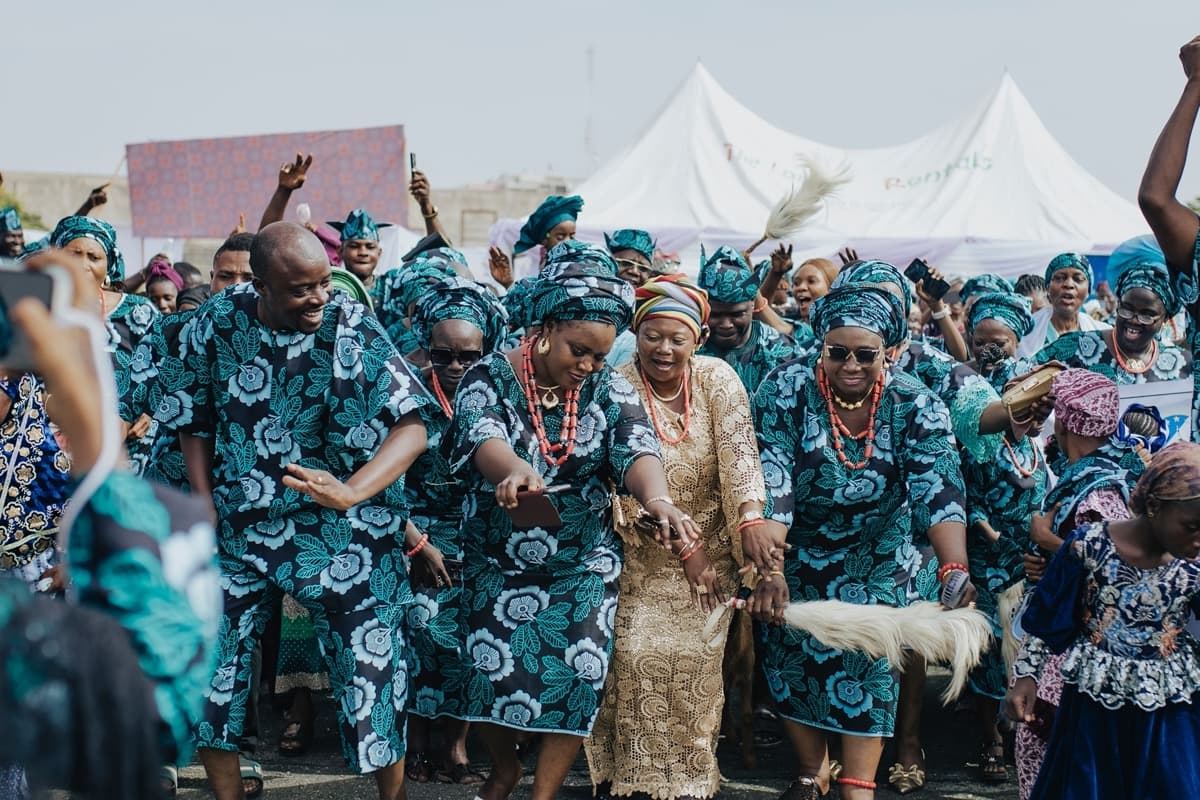
The dancing and the coordinated fabric aren't separate things at an owambe — they're the same display of support for the celebrant.
Spraying Money Is Real — and So Is Getting Arrested for It
This is genuinely one of the more surprising, well-documented parts of owambe culture. The practice of showering a celebrant with cash while they dance is generally traced back to the early 20th century, intensifying during the 1960s-70s oil boom as a public wealth and status display tied to juju and highlife music. Here's what a lot of people don't realize: spraying, dancing on, or stepping on naira notes is actually a criminal offense under Section 21 of the Central Bank of Nigeria Act, 2007, punishable by a minimum of six months in prison and a minimum ₦50,000 fine — and this isn't a dead-letter law. Real, named enforcement cases include entertainer Bobrisky, convicted and sentenced to six months after a viral clip spraying new naira notes at a 2024 movie premiere; socialite E-Money, arrested in April 2025 over alleged dollar-spraying; TikTok influencer Murja Kunya, arrested twice over a naira-abuse case; and Kannywood actress Samha Inuwa, arrested in a similar incident. The EFCC has stated it scaled up enforcement of this specific law from 2024 onward. If you're planning to spray cash at your own owambe, this is a real legal risk, not folklore.
The Gate-Crasher, and a Genuinely Different Phenomenon: the "Owambe Queen"
Two separate things get blurred together in casual talk about owambe, and they're worth keeping distinct. Real Nigerian journalism (Vanguard) has covered "gate-crashers," sometimes called "Mogba-Moyas" — uninvited attendees, a phenomenon real enough that rising costs have pushed some hosts to serve them takeaway food in cellophane bags rather than seating them at the reception. Separately, tabloid-style celebrity press (City People Magazine) has documented a real category of "owambe queens" — women legitimately and frequently invited to high-society parties who become known specifically for their fashion and near-professional-level attendance. Both are real, but they're not the same thing, and "owambe crasher" isn't actually an established term in reliable sources — the real vocabulary is "gate-crasher" and "Mogba-Moya."
Not Just Weddings — Including Funerals
The occasion range genuinely covers weddings, birthdays, anniversaries, housewarmings, graduations, naming ceremonies, retirement parties, chieftaincy title installations, and — this surprises people — funerals. There's a real, culturally specific distinction behind that: in Yoruba tradition, the funeral of an elder who lived a long, "successful" life is treated as a celebration rather than a mourning event, with the post-burial reception functioning as a genuine owambe — music, food, dancing. That's specifically for elder "homecoming" deaths, not tragic or young ones, which are not treated this way — worth being precise about rather than implying all Nigerian funerals are festive occasions.
What's Actually Trending, and the Real Economic Scale
Real 2025 fashion press coverage (BellaNaija) has treated owambe fashion as its own recognized editorial category, most visibly around event coverage like the "Owambe Thieves" movie premiere, framed explicitly around Lagos-style grandeur. Lower-tier fashion blogs point to corset detailing on lace and ankara aso-ebi, fringe details, bubu gowns, and crystal or sequin embellishment as current 2025 directions — treat that as general trend color rather than rigorously verified data, since we couldn't find harder, quantified trend reporting behind it.
On economic scale: real figures circulate, but they come from business-opinion journalism (Businessday, Tribune) rather than government statistics, so we're presenting them as widely-cited industry estimates, not verified data. Nigeria's wedding industry specifically is estimated at roughly ₦1.2 trillion a year across the full value chain, with the aso-ebi and fashion sub-sector alone estimated around ₦250 billion annually and catering around ₦400 billion. One frequently-cited projection claims the broader events industry could reach $20 billion by 2025 — that figure reads as promotional rather than measured, and we're not going to repeat it as if it's solid.
Ordering Yours
If you're dressing for an owambe, the outfit is really the whole point — our aso-ebi guide covers the coordinated-fabric tradition that defines these events, and our gele, lace, and agbada guides cover the specific pieces that actually show up on the dance floor.